UnionVelocity By Union Bank

Enabling 50,000+ vendors to access Union Bank core services through self-service onboarding and business KYC updates
Union Velocity is Union Bank Nigeria’s BaaS(API) platform built to CBN Open Banking standards, exposing accounts, payments, collections, and KYC via secure APIs so fintechs and other businesses can embed regulated banking through a developer portal and partner dashboard.
Banking
ROLE
Product Designer
YEAR
2026
IMPACT

ROLE
Contributions (me) | Collaborators | Tags |
|---|---|---|
Product Design | Jeffery (Product Lead) | Fintech |
Information Architecture | Emmanuel (Product Manager) | BAAS |
Design System | Oladeji (Engineer) | B2B |

PROBLEM
High barrier to entry for startups and other fintech companies
Fintechs can't access regulated banking rails without their own license. Getting a banking license or negotiating a direct bank partnership in Nigeria is slow, expensive, and out of reach for most early-stage fintechs.
Bank partnership onboarding is slow, manual, and opaque. Onboarding a new business takes 6–18 months of meetings and paperwork. Most of the process was manual, making it difficult for these businesses to scale and meet market demand.
I was brought on to lead the end-to-end design of a vendor platform that would streamline the self-service onboarding flow and enable a seamless process to access the bank's core services through an easy-to-use API manager system
OPPORTUNITY
Turning user needs into key design decisions
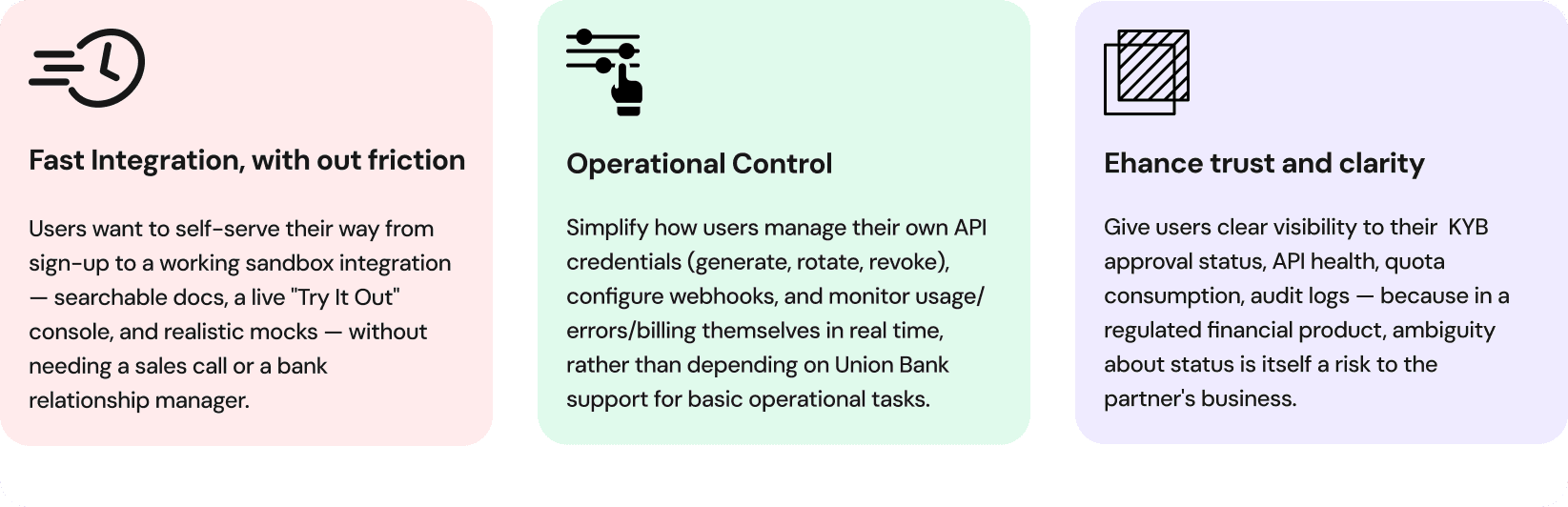

Shaping the experience
Given the tight timelines, I partnered closely with the head of design (Jeffery - great guy by the way 😊) to move quickly. I adopted an existing pattern library and tailored it to fit our product needs, allowing us to accelerate execution.
I also analysed leading fintech products across the market to understand common patterns and best practices, while also maintaining the bank's brand identity system.
One key challenge I faced during onboarding, KYC, and account creation was finding the right balance between simplicity and regulatory compliance. Due to banking regulations, we need a way to capture their industries.
To solve this, I iterated on two possible solutions.
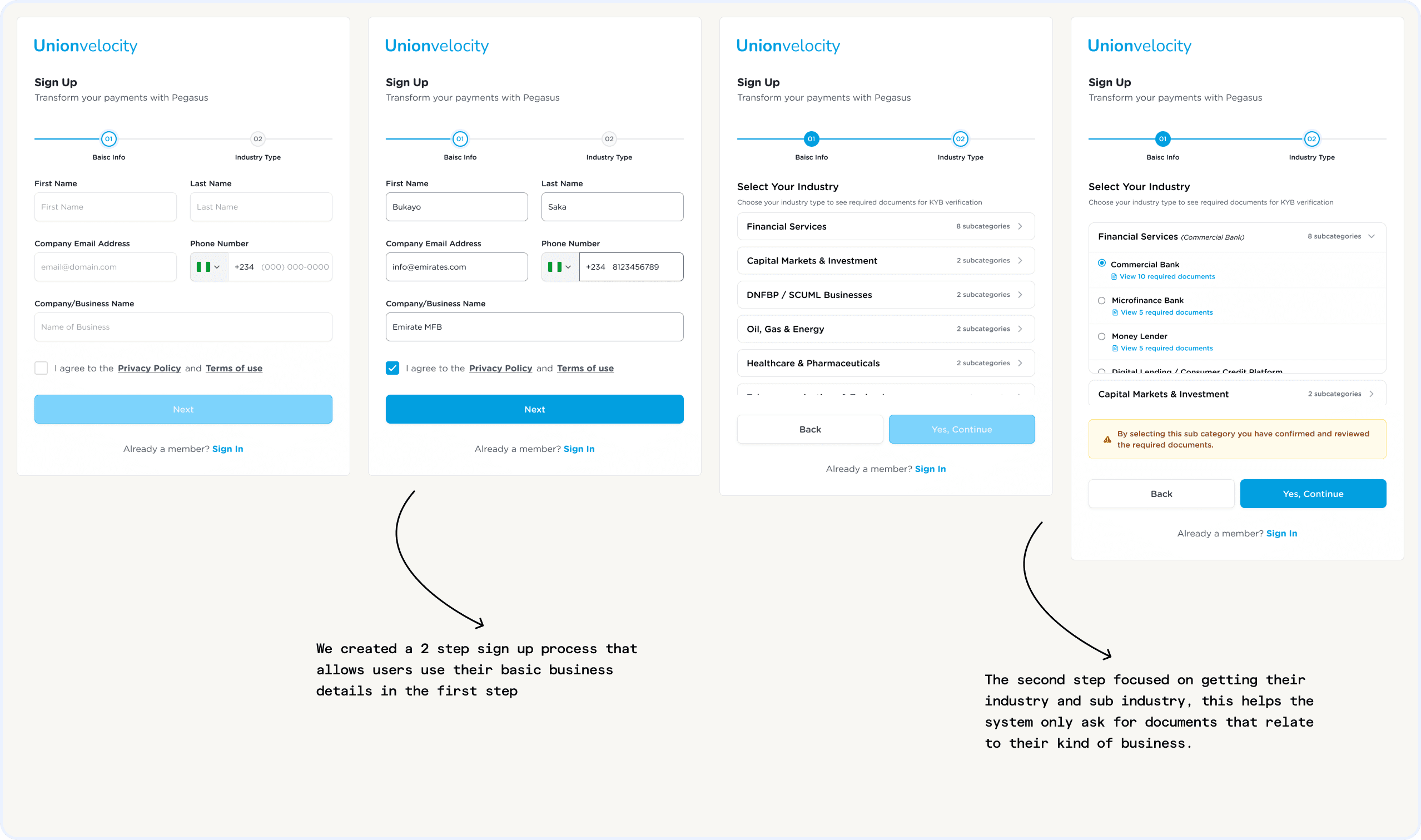
ITERATION 1: Users were to select their industry at sign-up. But after testing, we found out that this might delay users, as they would have to spend more time figuring out their industries, which already causes a blocker for users - with a long list to choose from, users may drop off early.
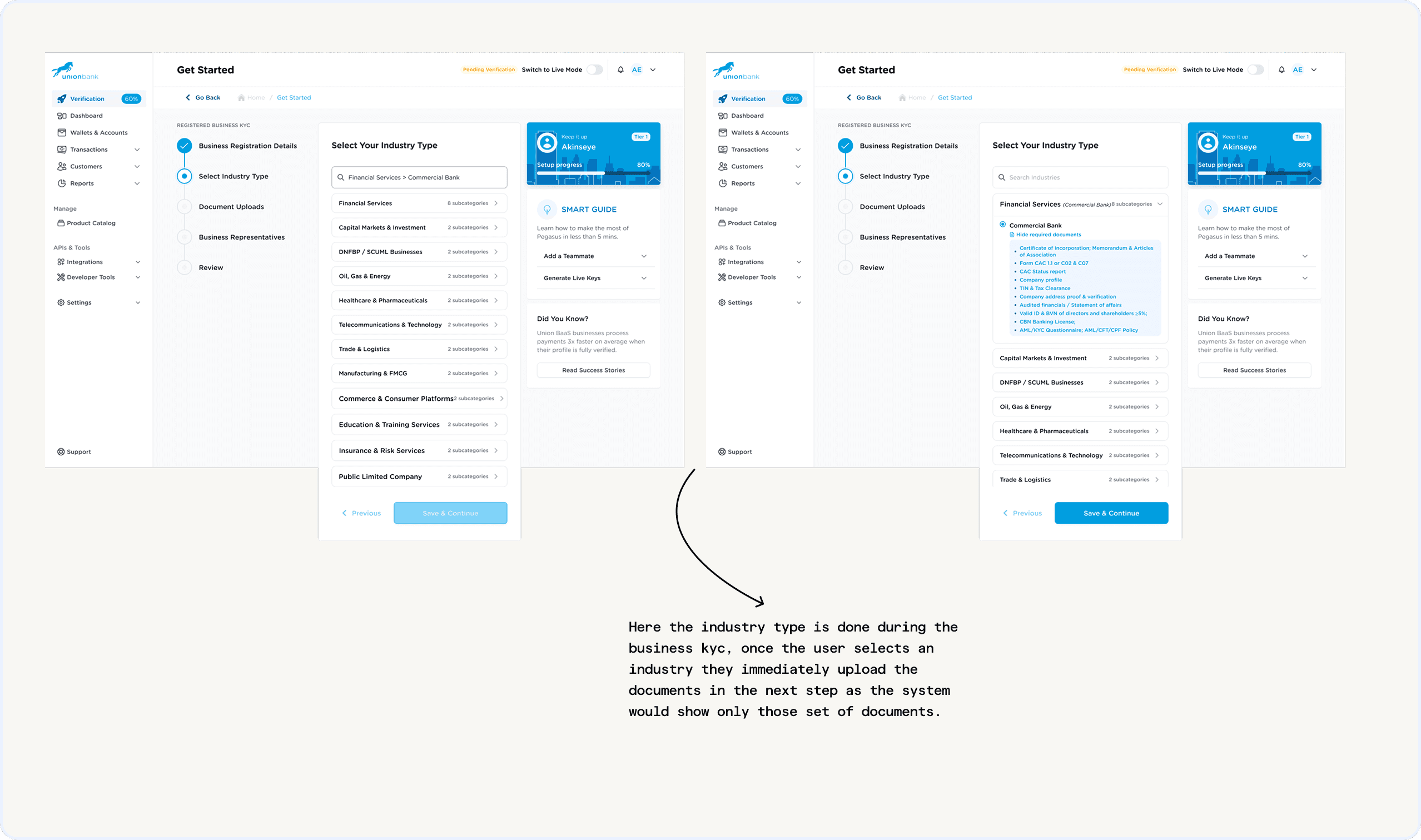
ITERATION 2: After providing their basic information at sign-up, users select their industry during business KYC; upon selection, they immediately upload the required documents in the next step. While this was an improvement from the previous iteration, having to go through a long, detailed list of industry and sub-industry would still affect the time-to-completion of the onboarding process.
SOLUTIONS
Sign Up
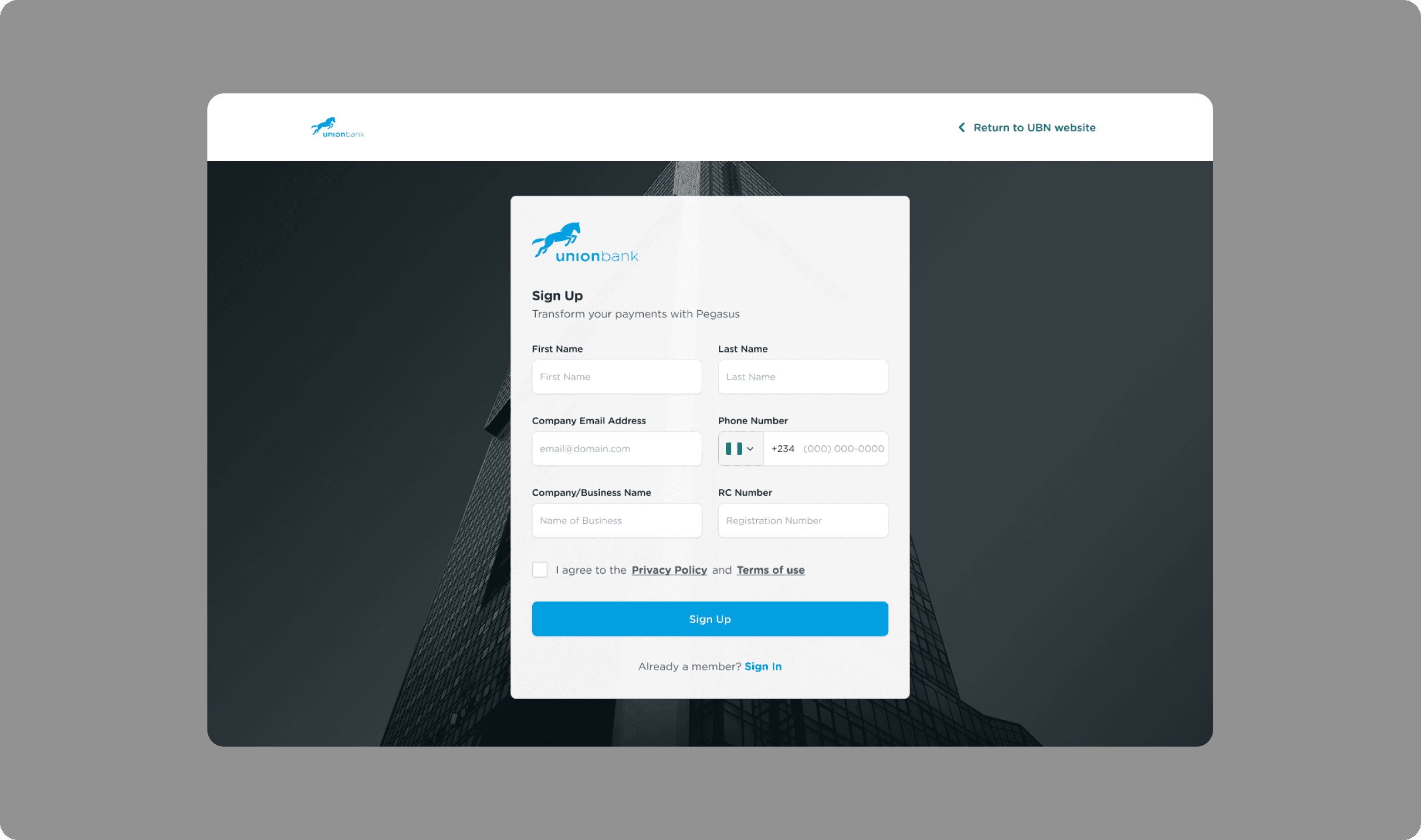
Instead of getting users to select an industry at sign-up, getting their RC number can help the system to determine the industry. This reduces the sign-up to one simple form input, so users can easily sign up and get started with onboarding faster.
Business KYC
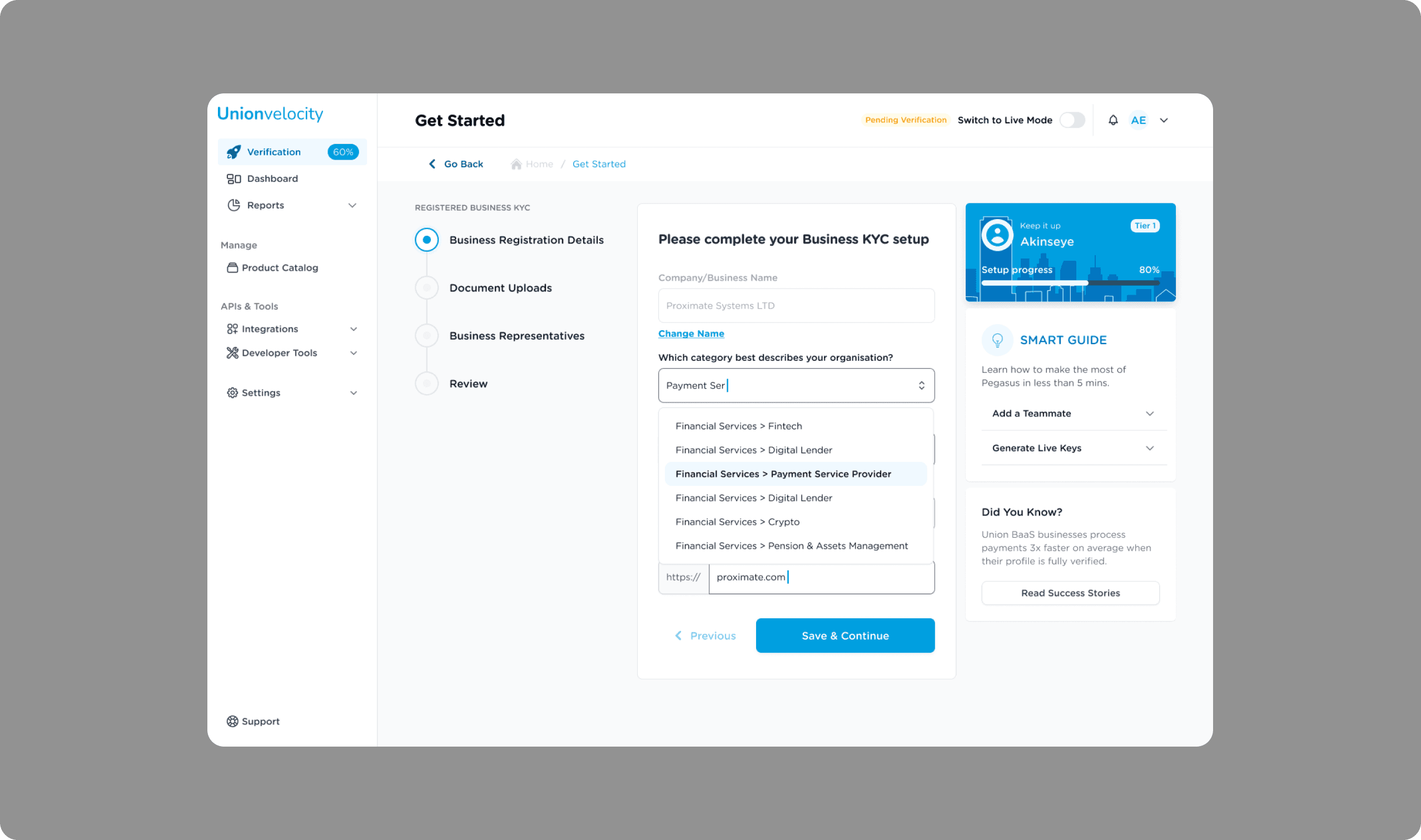
Without much hassle, users can easily search for their industry based on the category their business falls under; the system has already done the heavy lifting by segmenting categories to different industries. So instead of a long list of industries and sub-industries, users just need to input their type of business.
Billing
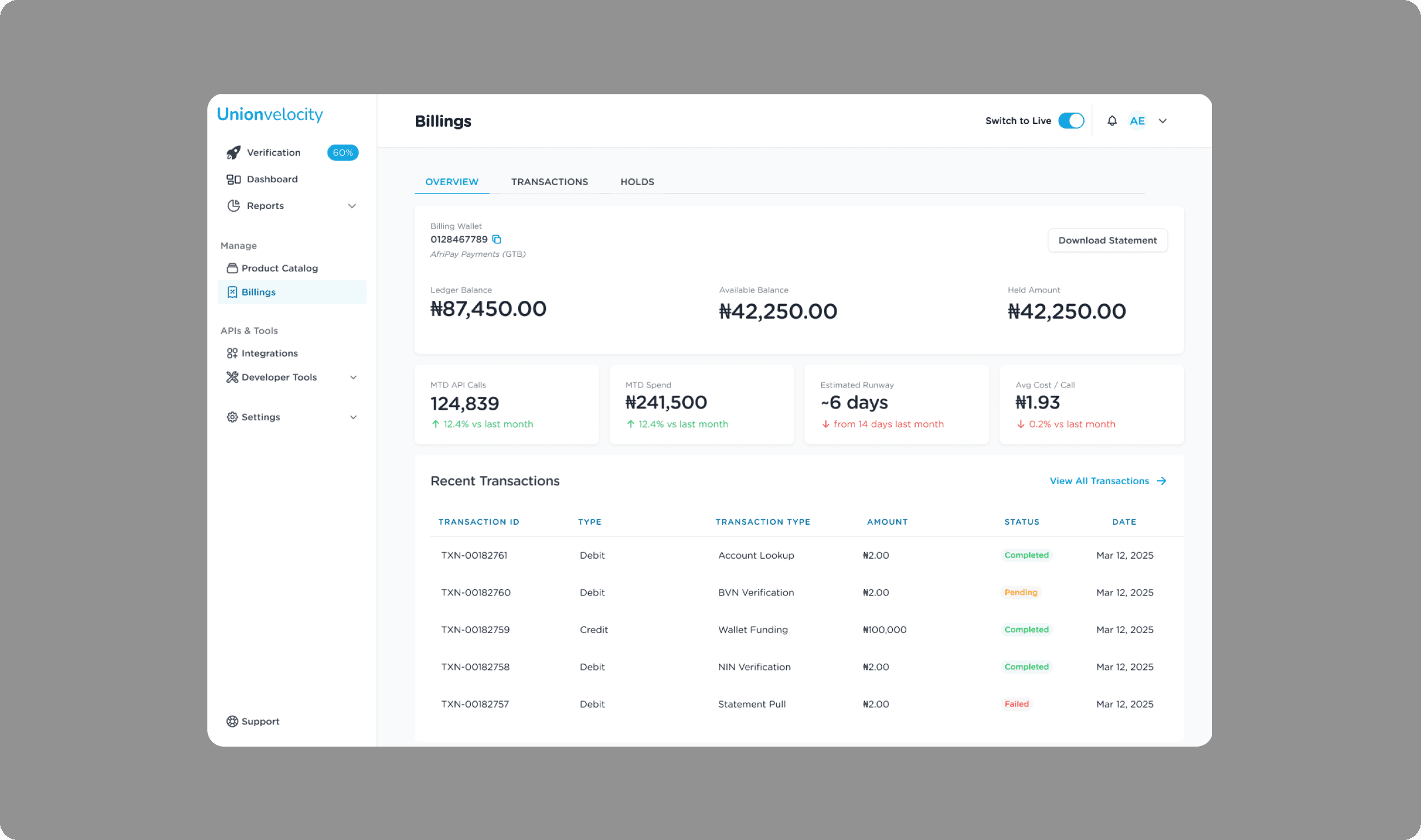
To help users stay in control, we designed a wallet-based billing system that allows them to monitor usage/errors/billing themselves in real time, rather than depending on Union Bank support for basic operational tasks.
API Product Catalog
Users can select from different API services and test them in the sandbox. The goal was to create an easy-to-use API catalogue so users can easily test.
API keys management
Users can securely manage API keys with full control to generate and revoke them from the platform.
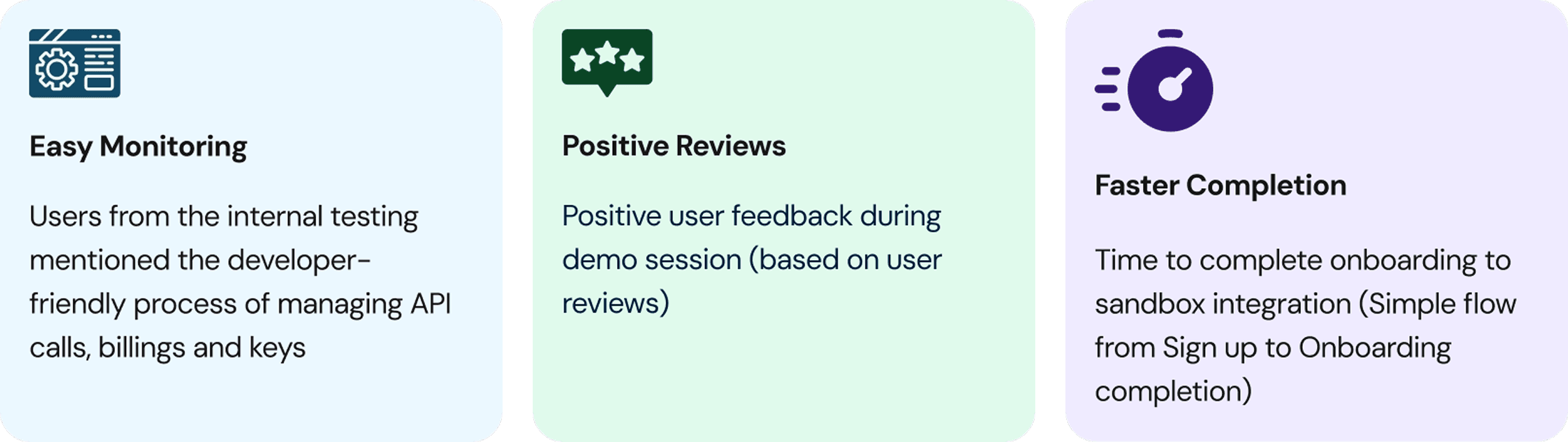
Impact from internal user testing:


Constraints & trade-offs
Leading the design of the vendor platform and designing a self-service onboarding process required navigating a few key constraints and trade-offs:
01
Worked within tight timelines and sprints, requiring quick, confident decisions with limited room for deep exploration, which required me to think outside the box. (Leverage AI tools for faster iterations)
02
Working with a volatile PRD that was subject to constant tweaks left little to no room for in-depth design explorations. Having constant interactions and collaboration with the team helped to manage blockers.
Closing
It was great collaborating with the team to shape and define how users can access Union Bank's core banking capabilities by designing the self-service onboarding experience.
Working closely with the Head of Design, Product Manager, and other stakeholders helped strengthen key decisions.
This project pushed me to think quickly and structure complex information into a flow that feels clear and easy to complete. It reinforced my focus on designing for human experience, creating experiences that are not only functional, but also intuitive and enjoyable to use.
I’m looking forward to seeing this experience in use and gathering feedback from employees.
