Ledgerly

Designing a fintech that turns invoices into instant working capital for SMES
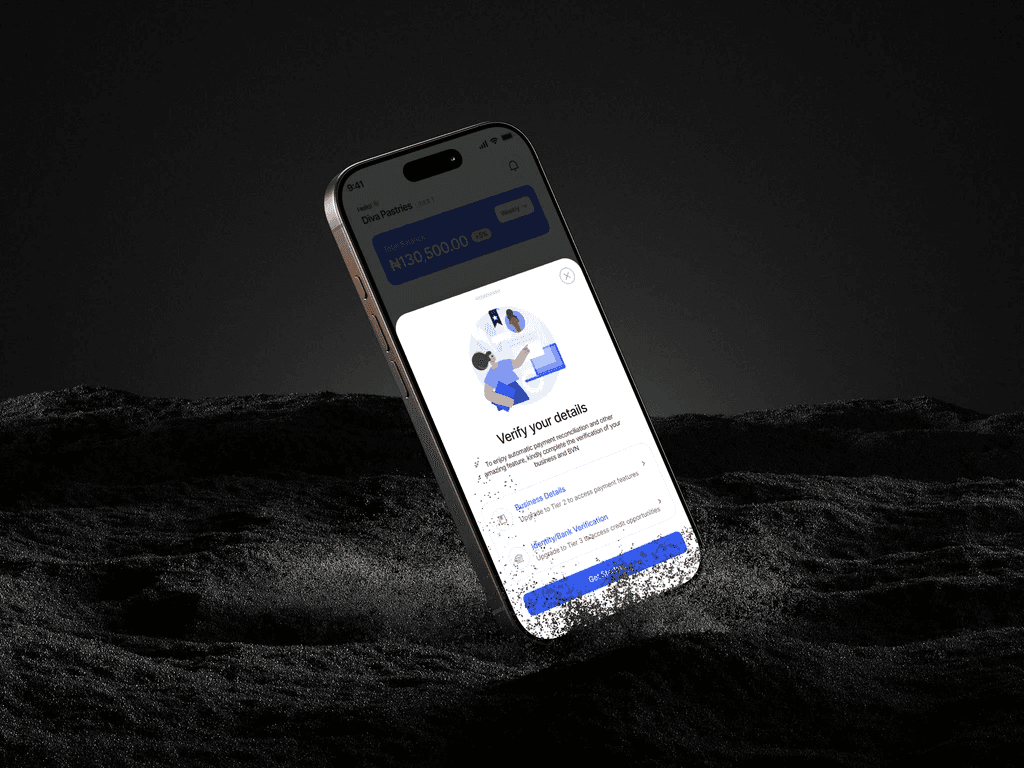
Ledgerly is a mobile-first platform for Nigerian SMBs. The brief was simple and hard: help small business owners track money, collect payments, and access credit — without asking them to change how they think about money.
FINTECH
ROLE
SOLO PRODUCT DESIGN
YEAR
2026
PROBLEM
Spreadsheets, WhatsApp, and loan sharks
Having conversations with some friends who were small business owners revealed a consistent pattern: informal tools, unprofessional collections, and a complete shut-out from formal credit, all creating a cash-flow trap that stunts growth.


ROLE
Everything from research to final screens
As a personal project, I owned the entire process — no handoffs, no product managers, no safety net.
I carried out user interviews with some SMB owners to under there needs and any current loopholes in similar products.
Defined the product vision to create more opportunities for future solutions.
Designed the information architecture structure that guided how each screen would be created.
Designed a progressive value system that improves user experience of the product.
OPPORTUNITY
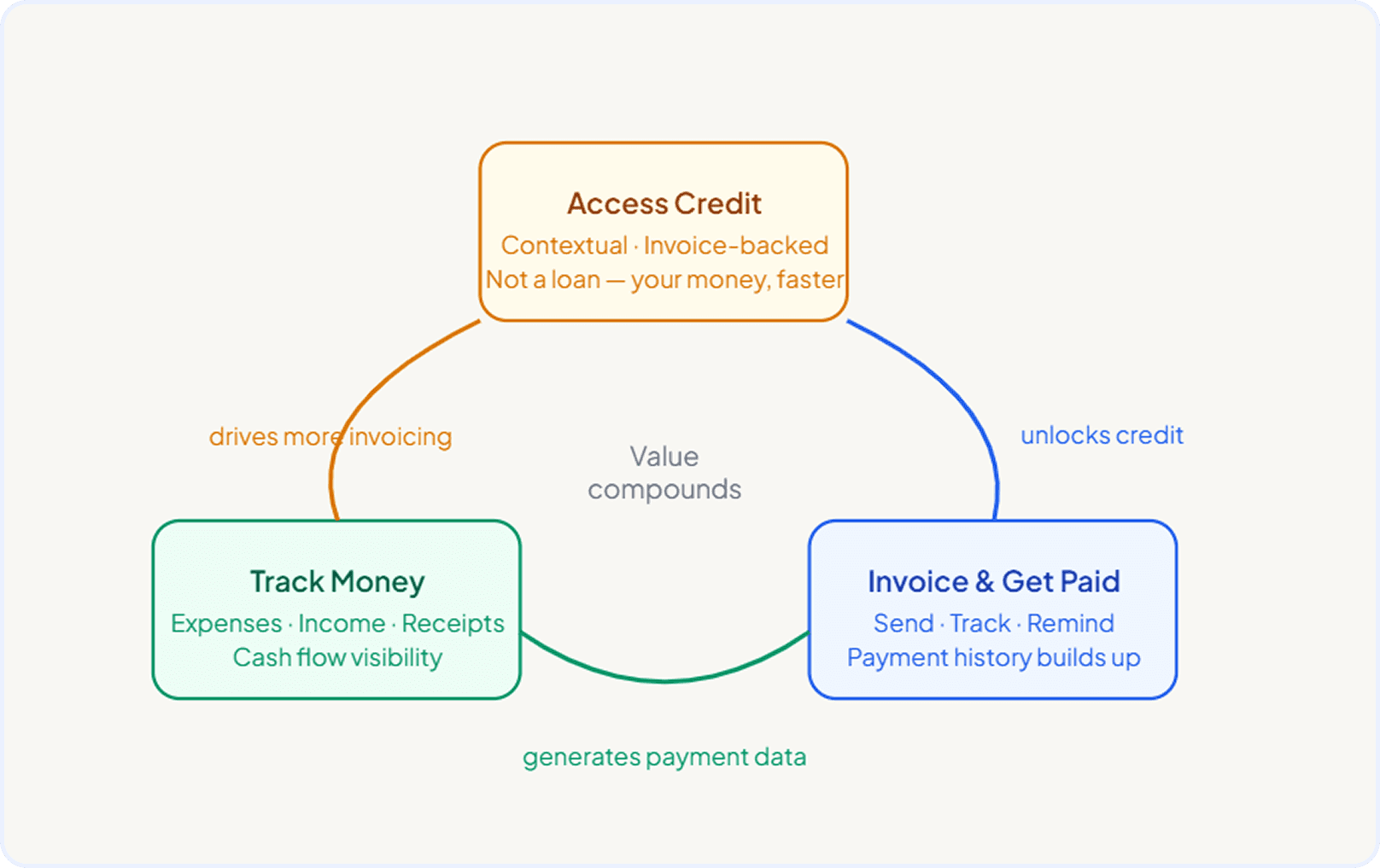
Progressive value delivery — a value ladder, not a feature list
The insight was that the three pain points aren't separate problems — they're three stages of the same journey. A business owner who starts tracking money naturally needs to send invoices. Those invoices generate a payment history. That history is the collateral for credit. Design the loop, not the features.

APPROACH
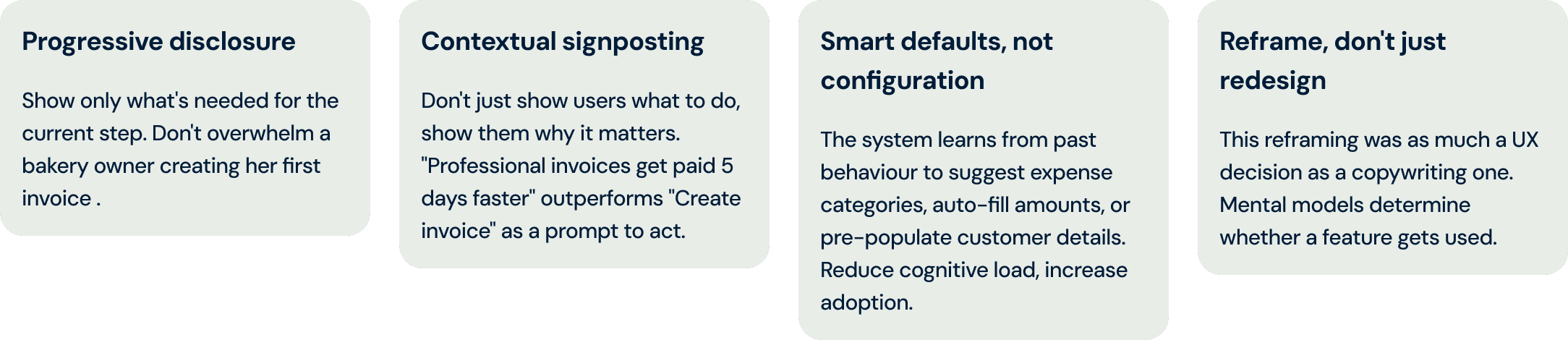
Four design principles that shaped every decision
EXECUTION
Where the hardest thinking happened
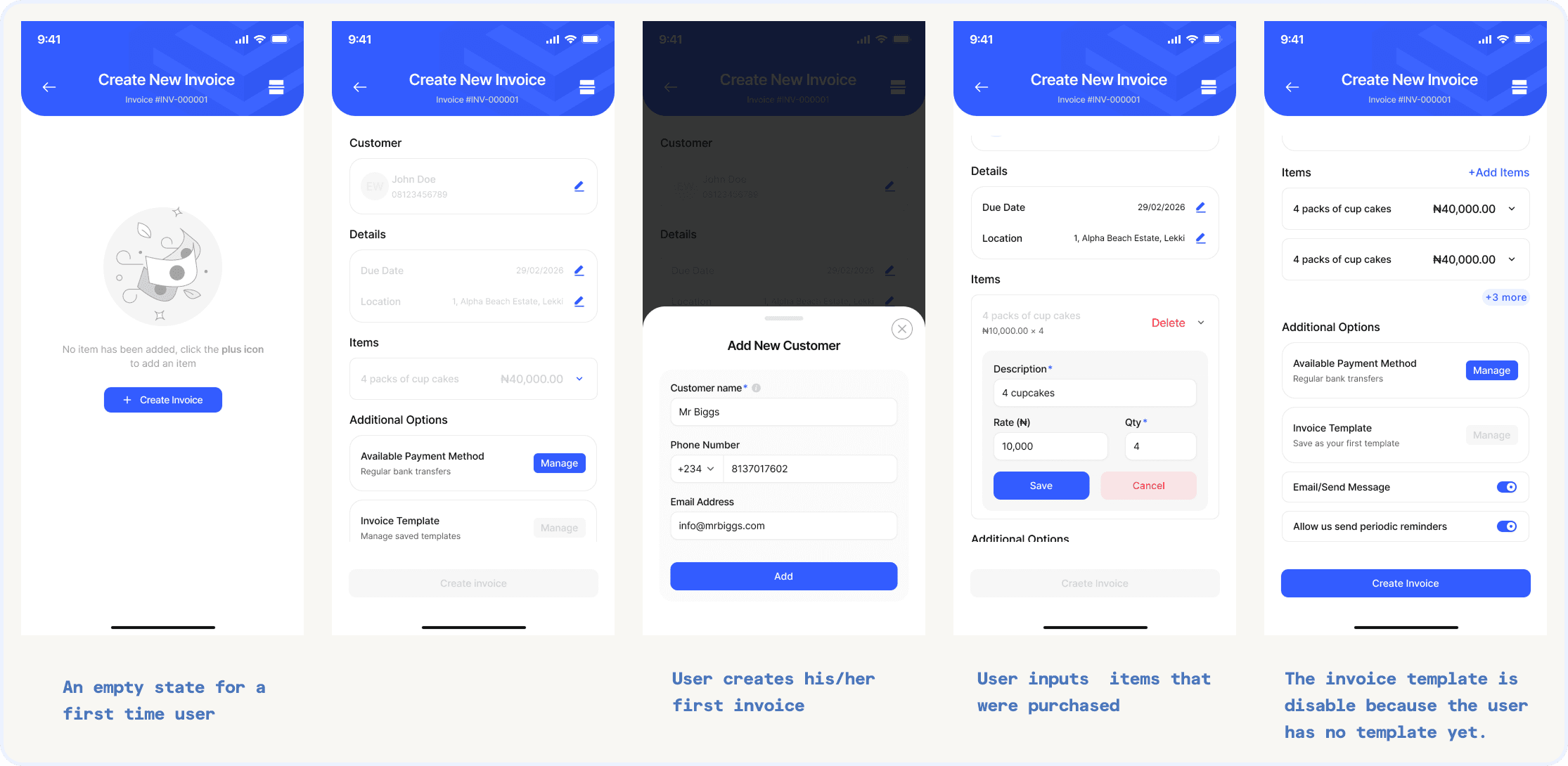
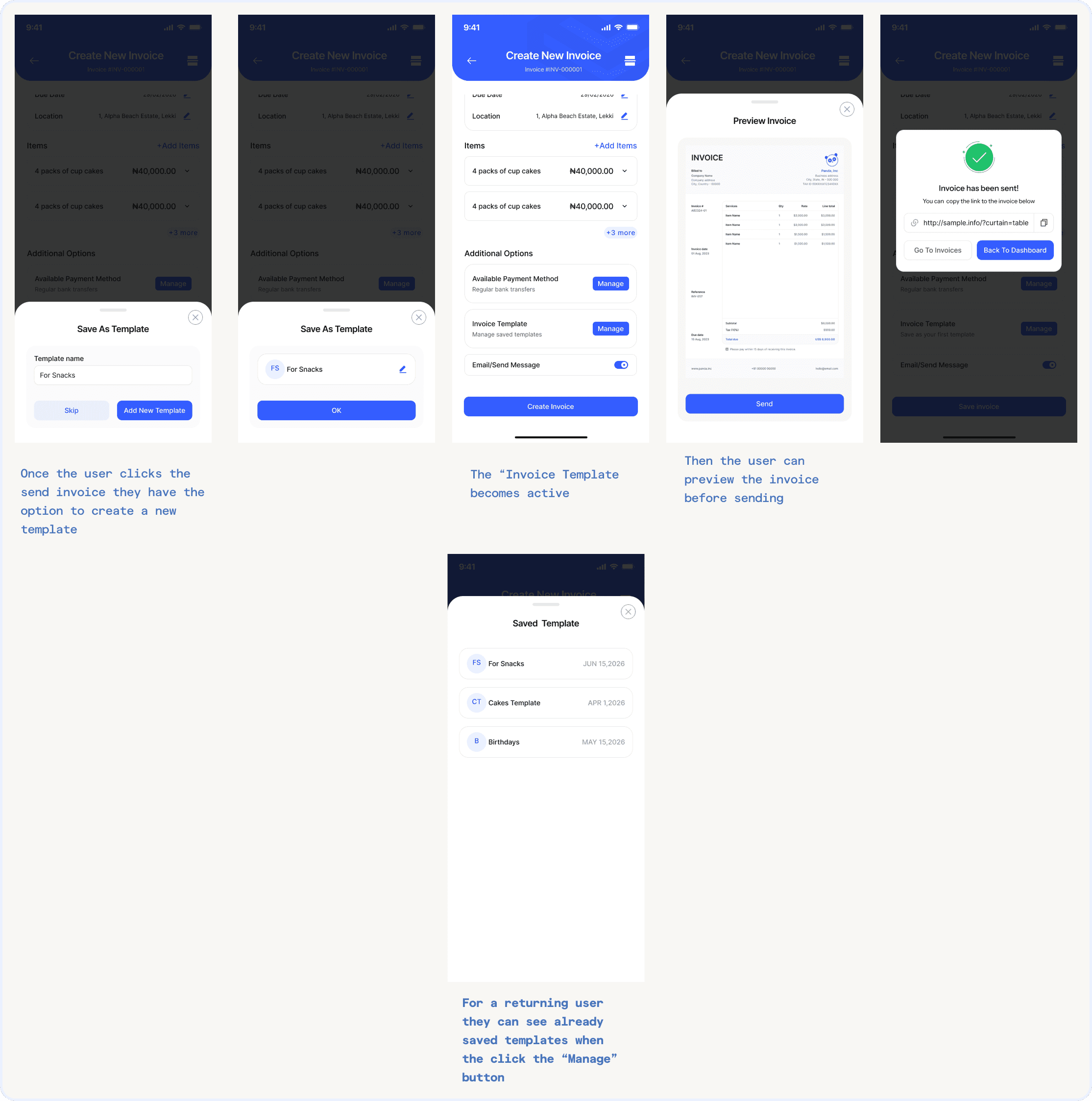
Invoice creation with templates
By building a template and auto-fill system based on past items, returning customers, and common amounts, the creation flow becomes faster with each use — turning repetitive work into a near-automatic action.
RATIONAL: With the template, users spend less time creating invoices each time they need one.
OCR receipt scan as an alternative means of bookkeeping and invoice creation
Adding an OCR scanner feature for expense recording and invoice creation encourages bookkeeping on the part of the user; one of the issues these SMBs faced was not having one place that helps them track expenses aside from the need to create invoices. OCR scans the receipt; the system parses the image, pre-fills the fields, and only asks for confirmation where necessary.
RATIONAL: This would reduce the mental stress of maintaining a proper bookkeeping system.
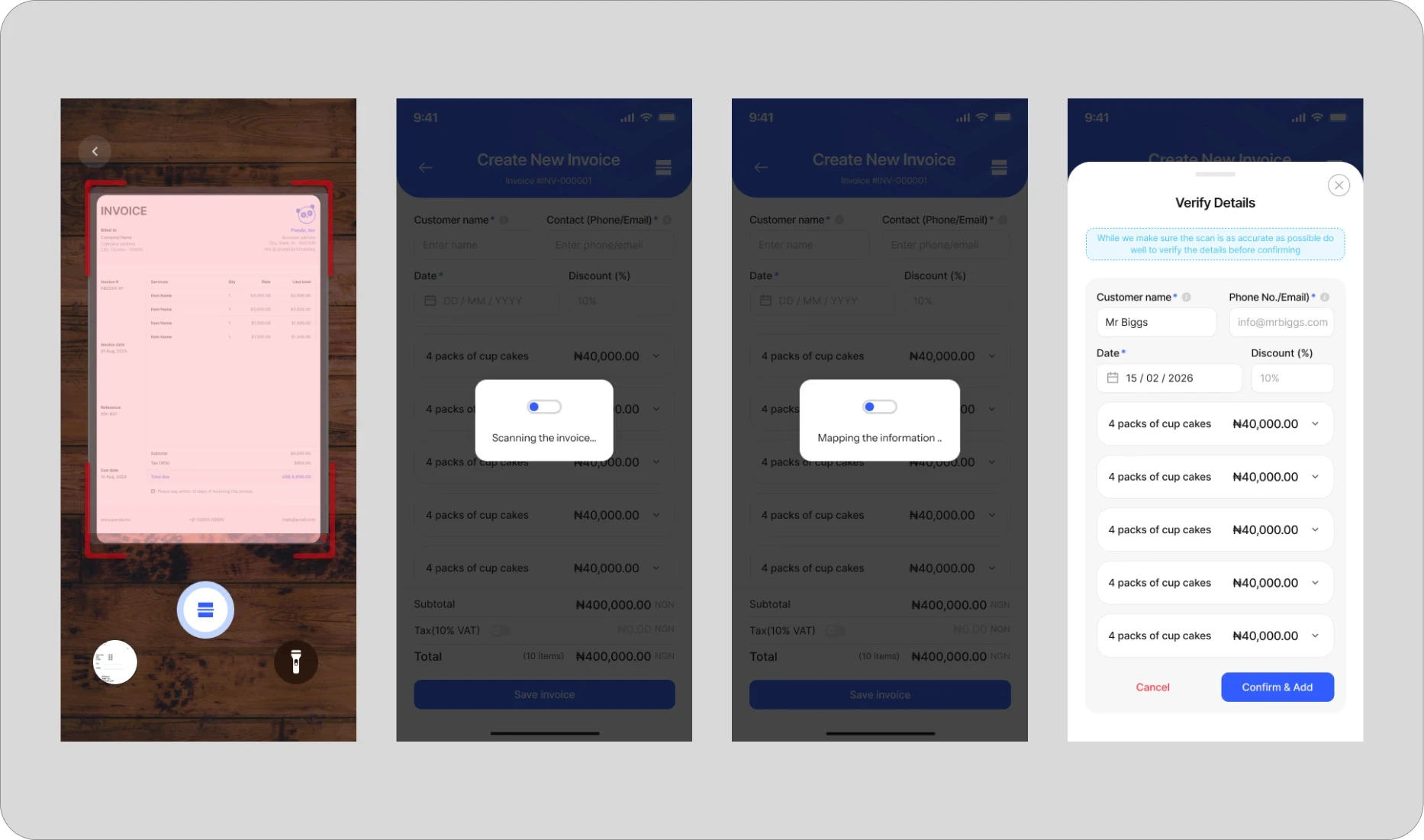
OCR scanning to create an invoice
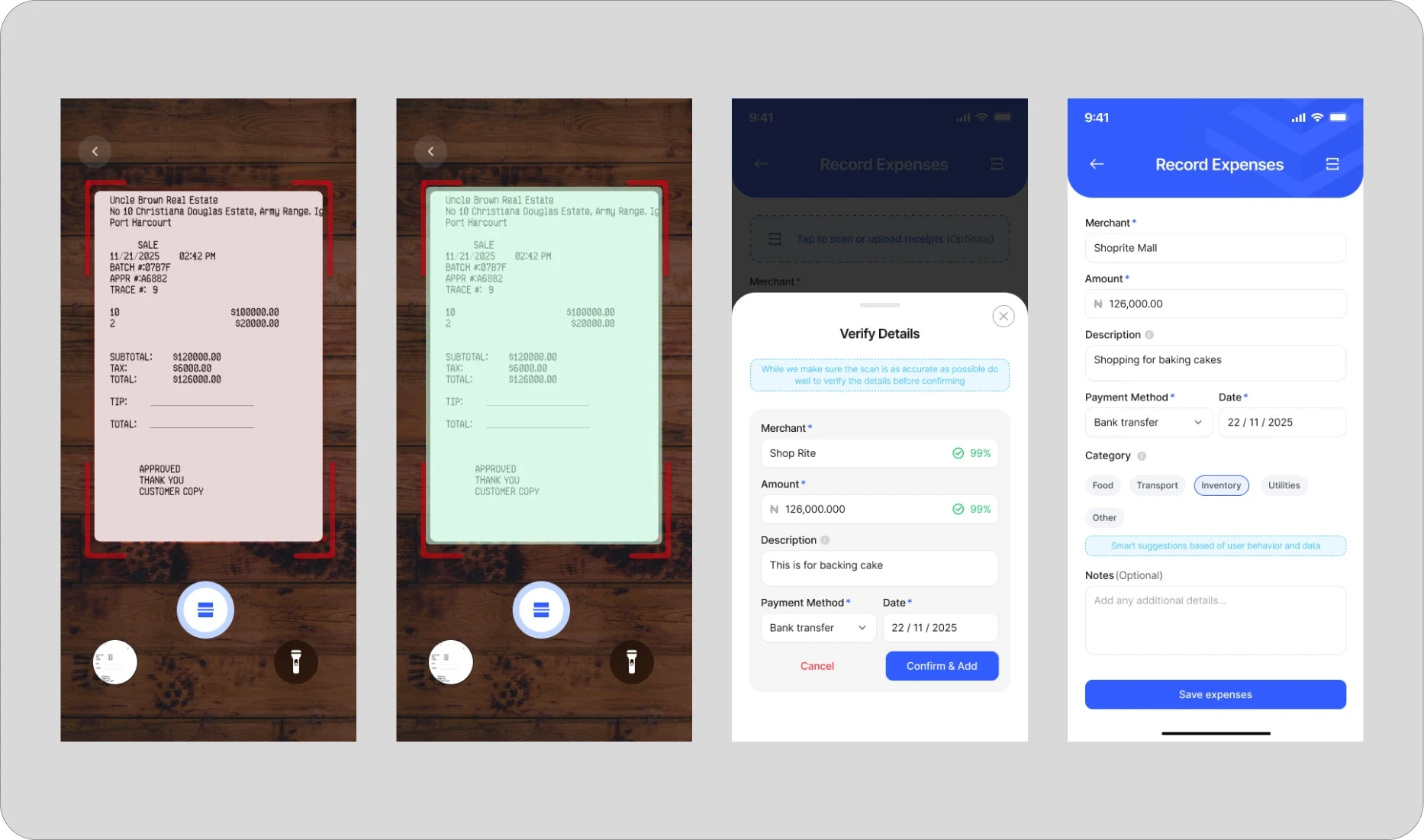
OCR scanning to record an expense
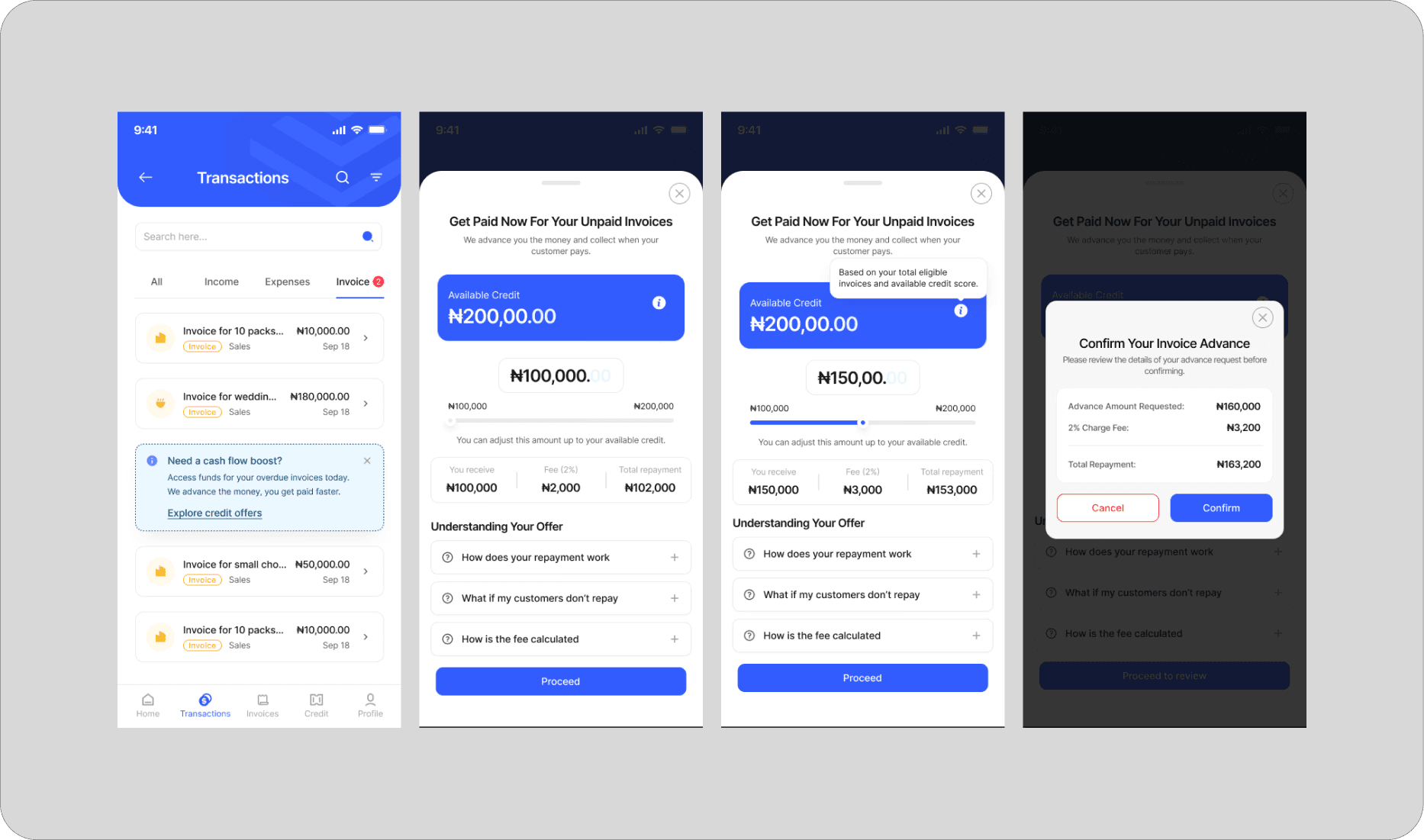
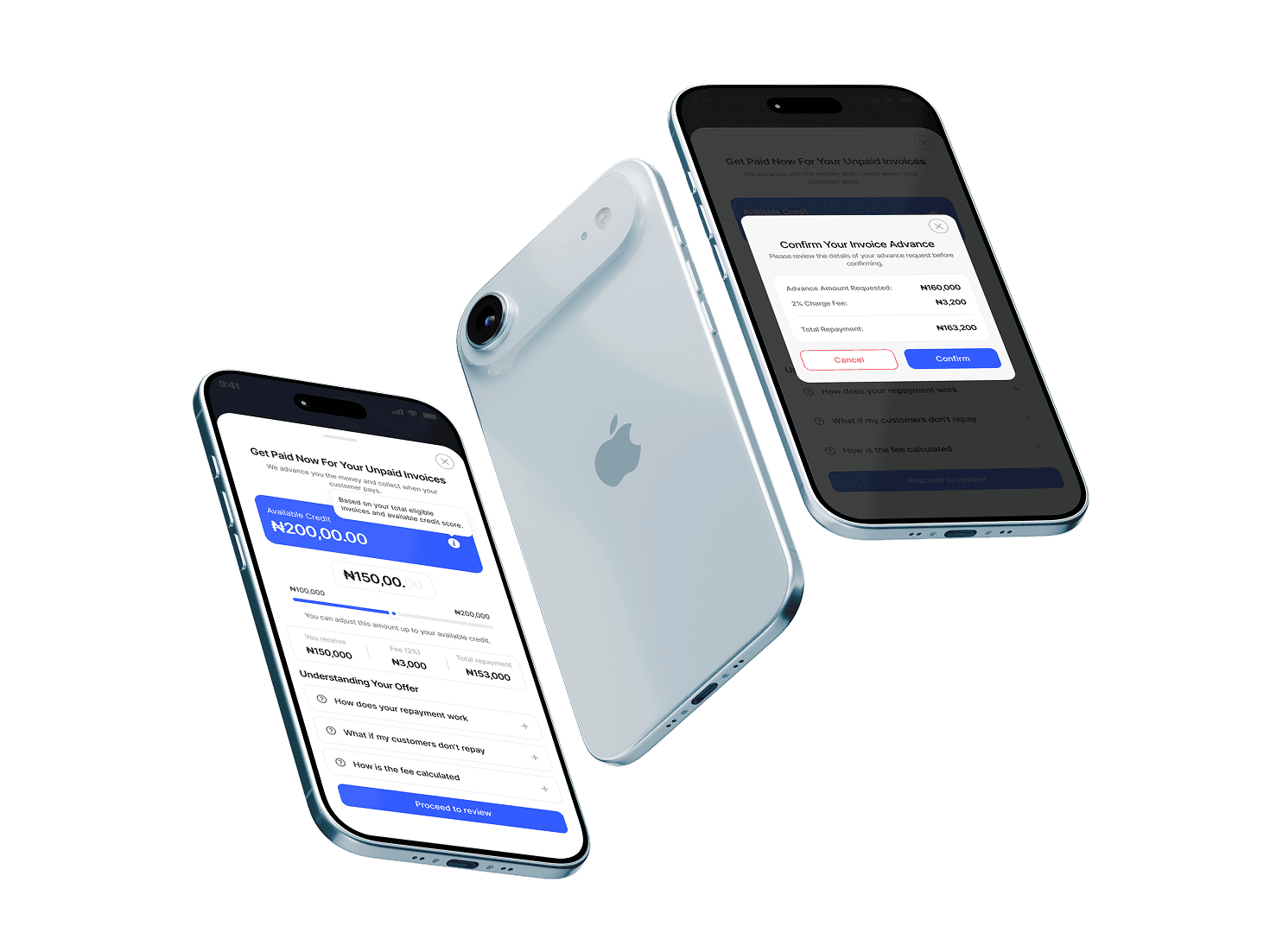
Contextual credit offers, not loan applications
By surfacing the offer exactly when the user is looking at an unpaid invoice, the moment of peak pain — the context makes the offer feel helpful rather than predatory.
RATIONAL: Contextual placement just at the right time for users to take credit opportunities, reducing psychological resistance to credit
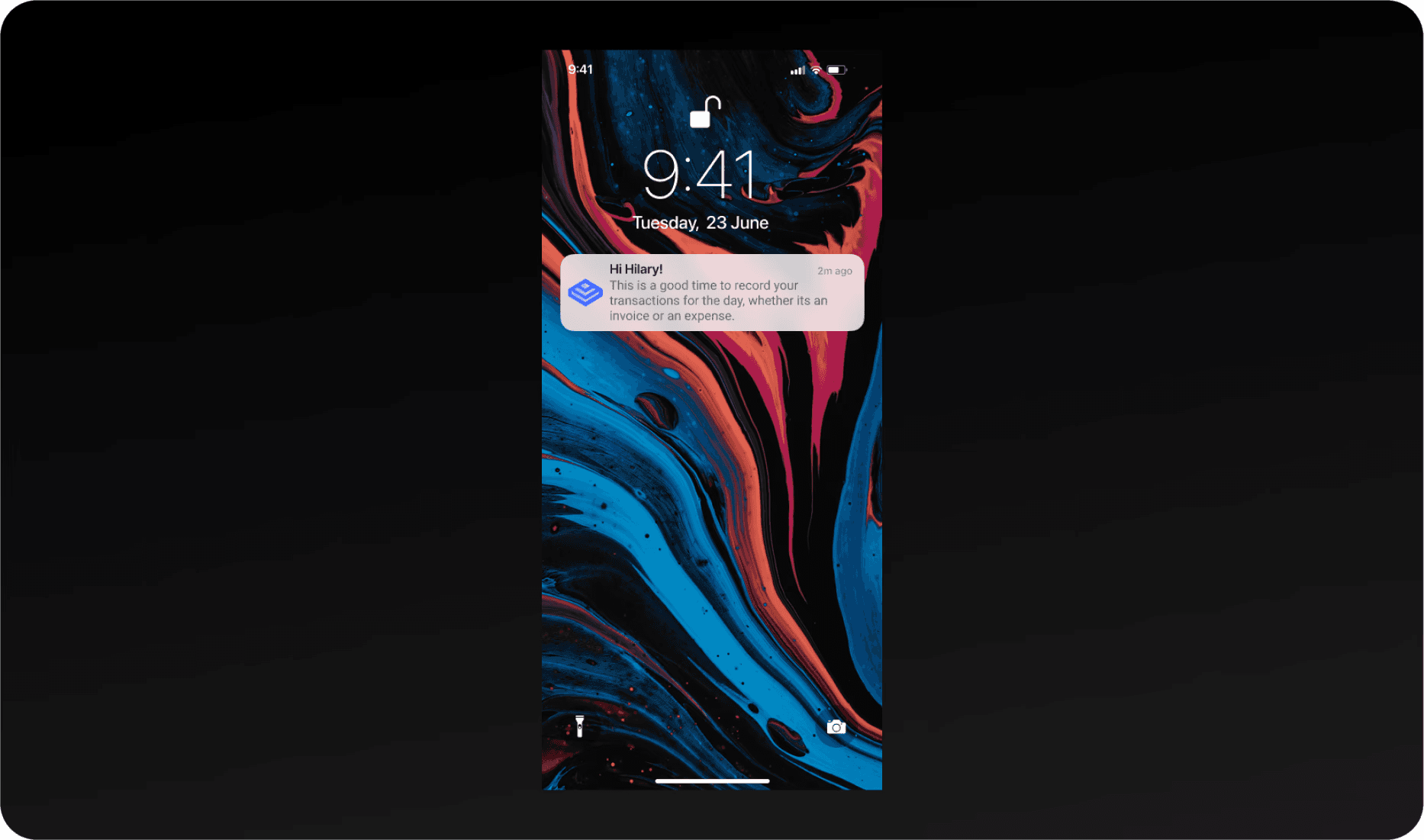
Push notifications designed around bookkeeping discipline
Rather than generic "You have notifications" prompts, Ledgerly sends time-anchored nudges: "End of day — any expenses to record?" or "Invoice #INV-004 is 7 days overdue — send a reminder?" These are functional prompts tied to real business outcomes
RATIONAL: Help users build the right habits for their business, which improves time spent on the platform.
IMPACT
What the design achieved
Created alternative bookkeeping systems like OCR scanning and a template system that anticipated the need for a seamless experience for users.
Designed a context-prompting system to encourage credit applications for users, reducing credit accessibility barriers.
Designed a product solution to address 3 core pain points that users faced.


LEARNINGS
What I'd do differently with more time
Even as a side project, the lessons from this project came from the gaps between what I designed and what would have improved the product.
Test the payment flow — the product's core value prop: I designed the invoice payment experience based on assumptions about what would feel natural. When I reviewed it with users, there was the option of automating the entire payment process, where the customer makes a payment through a payment gateway and the system automatically updates the user that a payment has been made.
Intermittent connectivity is a day-one constraint:
While working on this project, I realised many users would operate on patchy network connections. Redesigning invoice creation and expense recording to work offline with background sync when connectivity returns was painful to retrofit. It should have been a founding constraint from the very start.
