Lokate.Africa

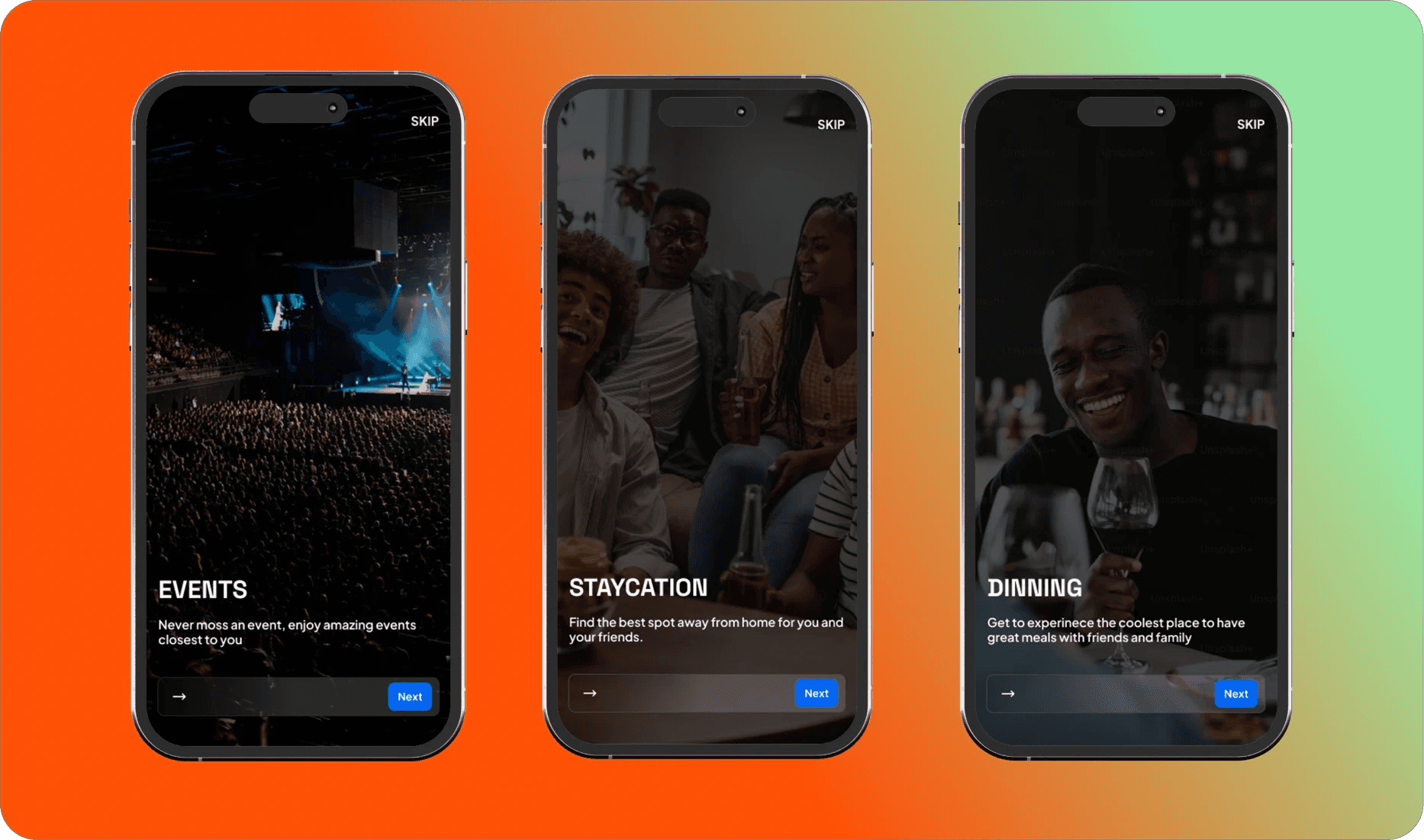
Reducing planning friction for event-goers through a unified platform for events, dining, and accommodation.
Own the whole night out
Users didn't need another events app, another booking app, or another restaurant directory. The goal was to become the single destination for urban discovery, connecting three disconnected verticals — events, dining, accommodation into one intelligent, two-sided platform. The win condition wasn't feature parity with any one competitor; it was owning the full journey.
Events
ROLE
UI/UX DESIGN
YEAR
2024
PROBLEM
One night out, three apps, no thread
When people are planning a Friday night out in Lagos, event-goers and spontaneous planners have to use separate apps to find events, restaurants, and hotel prices, which makes the experience disconnected and time-consuming, even though these choices are usually linked. A person buying a concert ticket will often also need food nearby and, in many cases, a place to stay.
IMPACT
From three apps to one decision
Successfully designed 3 different disconnected processes into one app.
Designed and integrated an AI-assistant feature that improved the event-finding process.
Enabled event creators and businesses with an intuitive marketplace to showcase their events, restaurants, or short-let apartments.
ROLE
Sole designer, two Interfaces
As the solo designer, I owned the end-to-end UI/UX design across two parallel interfaces built on one shared system: the explorer-facing app (discovery, browsing, booking, payments) and the organiser-facing platform (listing creation, booking management, edits). I also worked on user research, information architecture, interaction design, flow design and the component system, working directly with the product owner and 2 engineers through the build cycle ahead of v1 launch.
APPROACH
Map the current state, build one system
Due to project timelines and delivery, there was no room for an in-depth research process; however, we leveraged other means to gain insights and understand user behaviour. The goal was to understand potential usability issues and identify opportunities for improvement using existing information.
Online information on how people interact with event-finding applications
Journey mapping of the end-to-end booking process to understand user behaviours
Drafting key user flows and information architecture to iterate our design solutions.
Journey Maps and IA
At the end of the day…
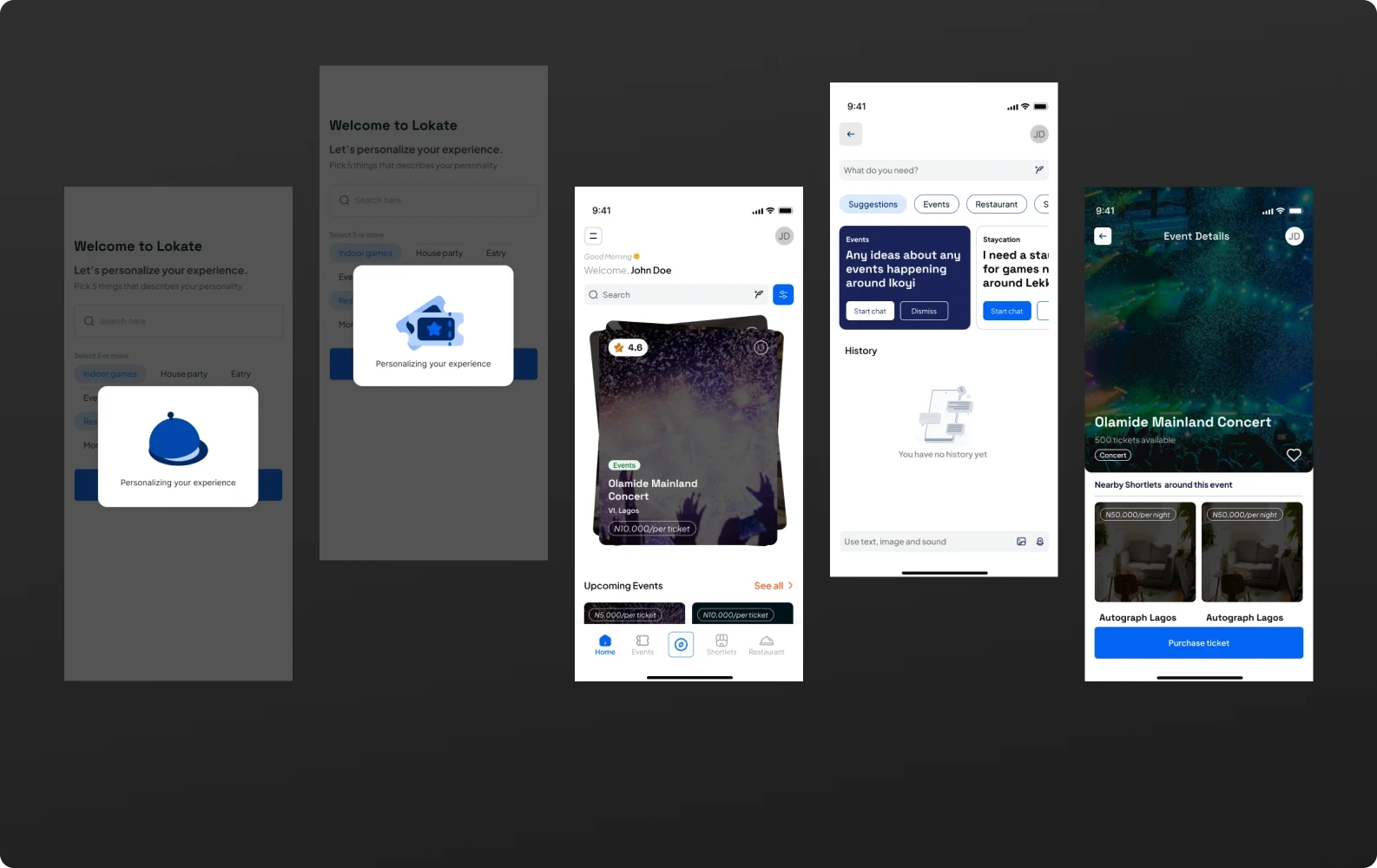
Users didn’t want another separate event, restaurant or short-let rental platform; they needed one app that connects all three.
OPPORTUNITY
Anticipate, don't wait to be searched
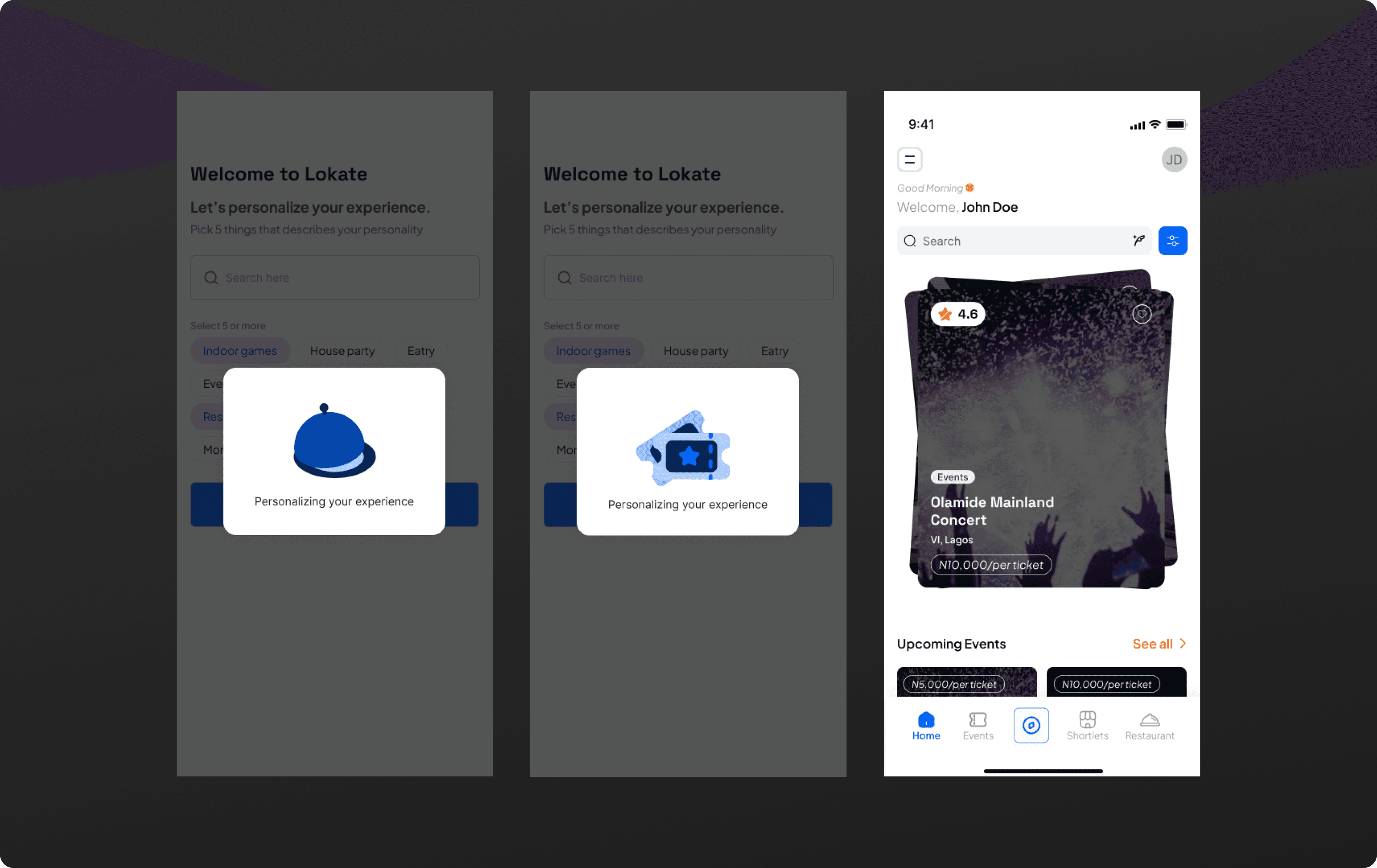
If discovery, validation, and booking lived in a single flow, the system could anticipate user needs rather than waiting for a search field.
The opportunity was to design for their whole journey, not isolated touchpoints.
Key Design Decisions
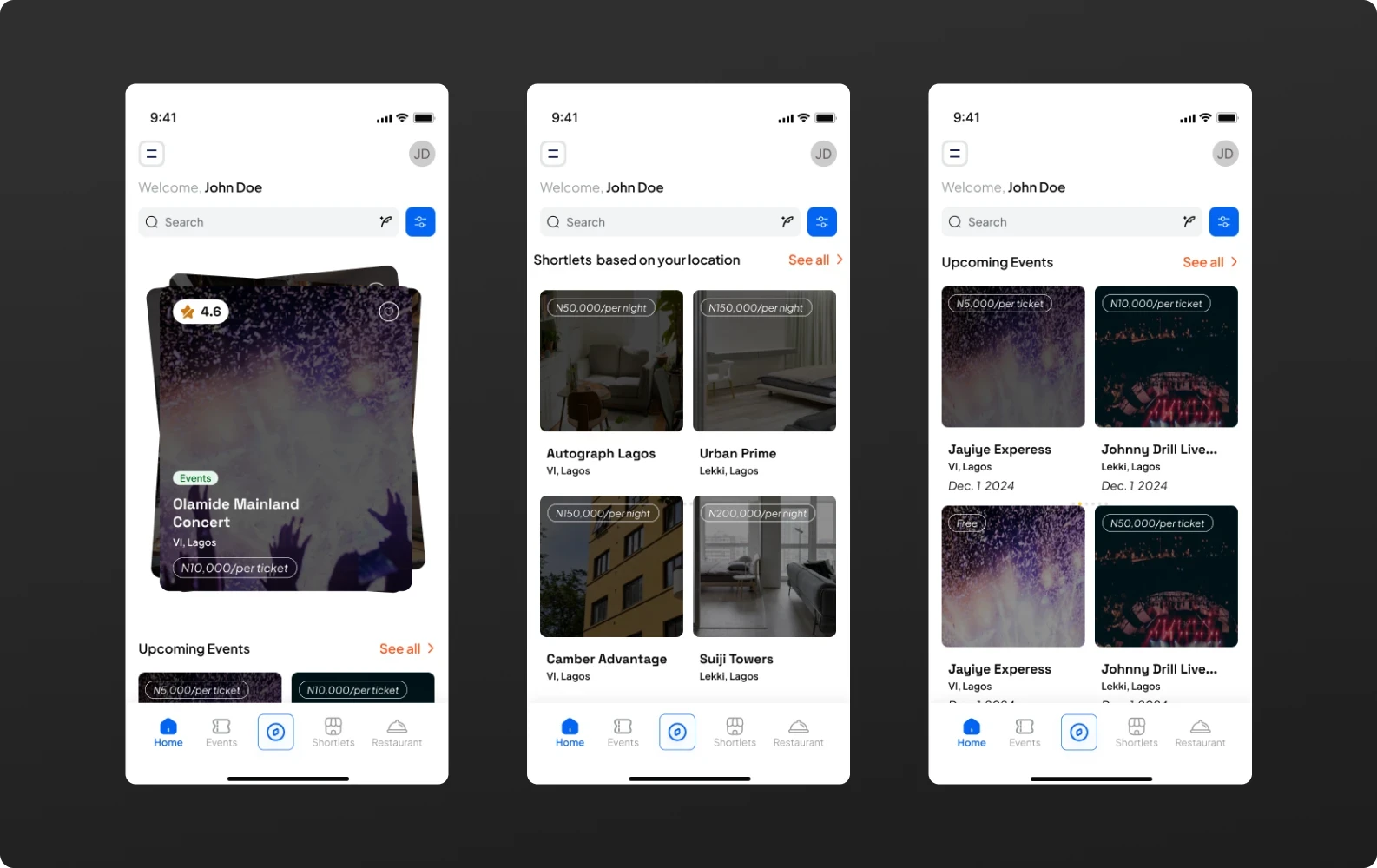
Context-aware home over a static feed
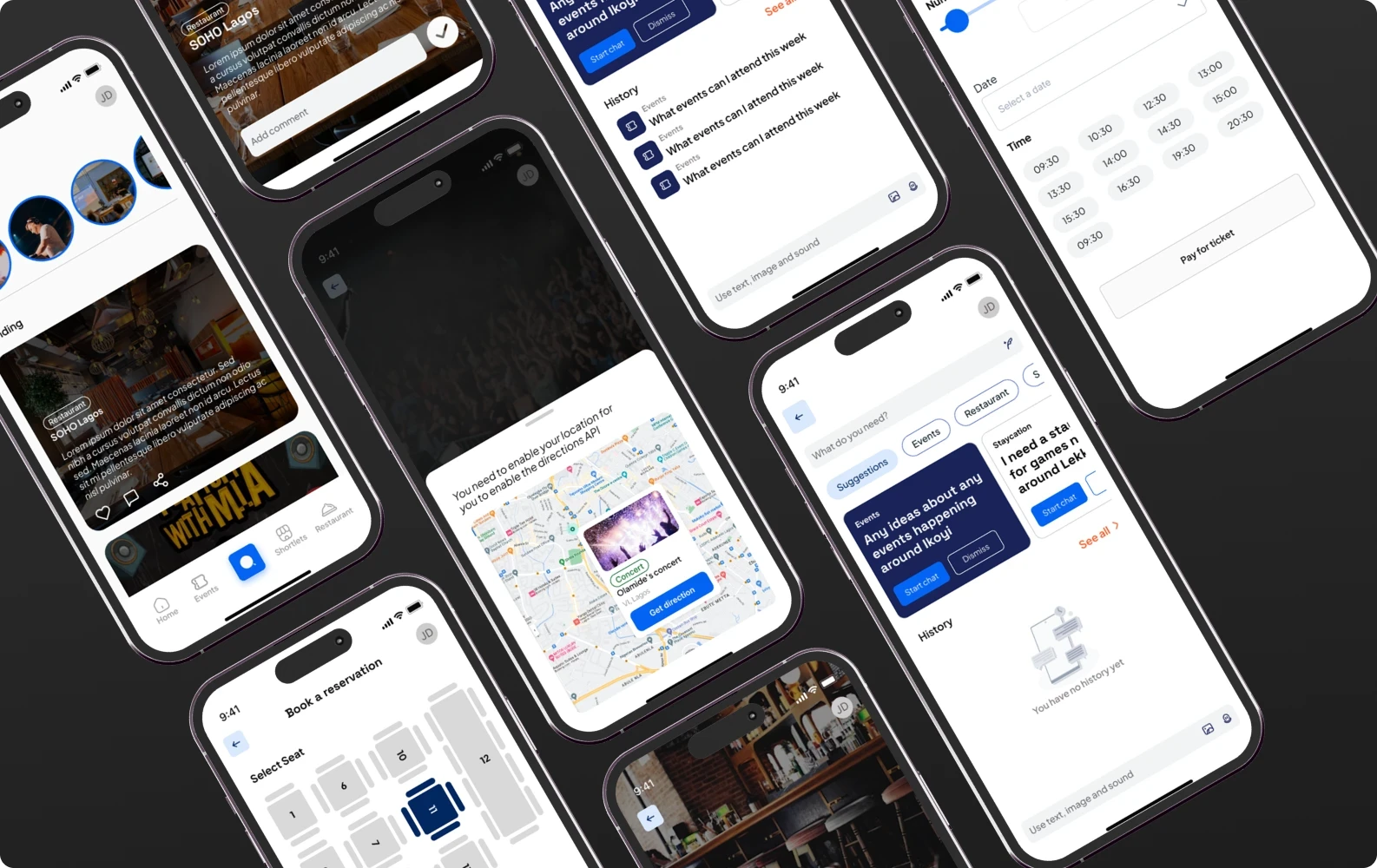
The feed adapts to time, location and behaviour, so the home screen does the first round of filtering before the user has to.
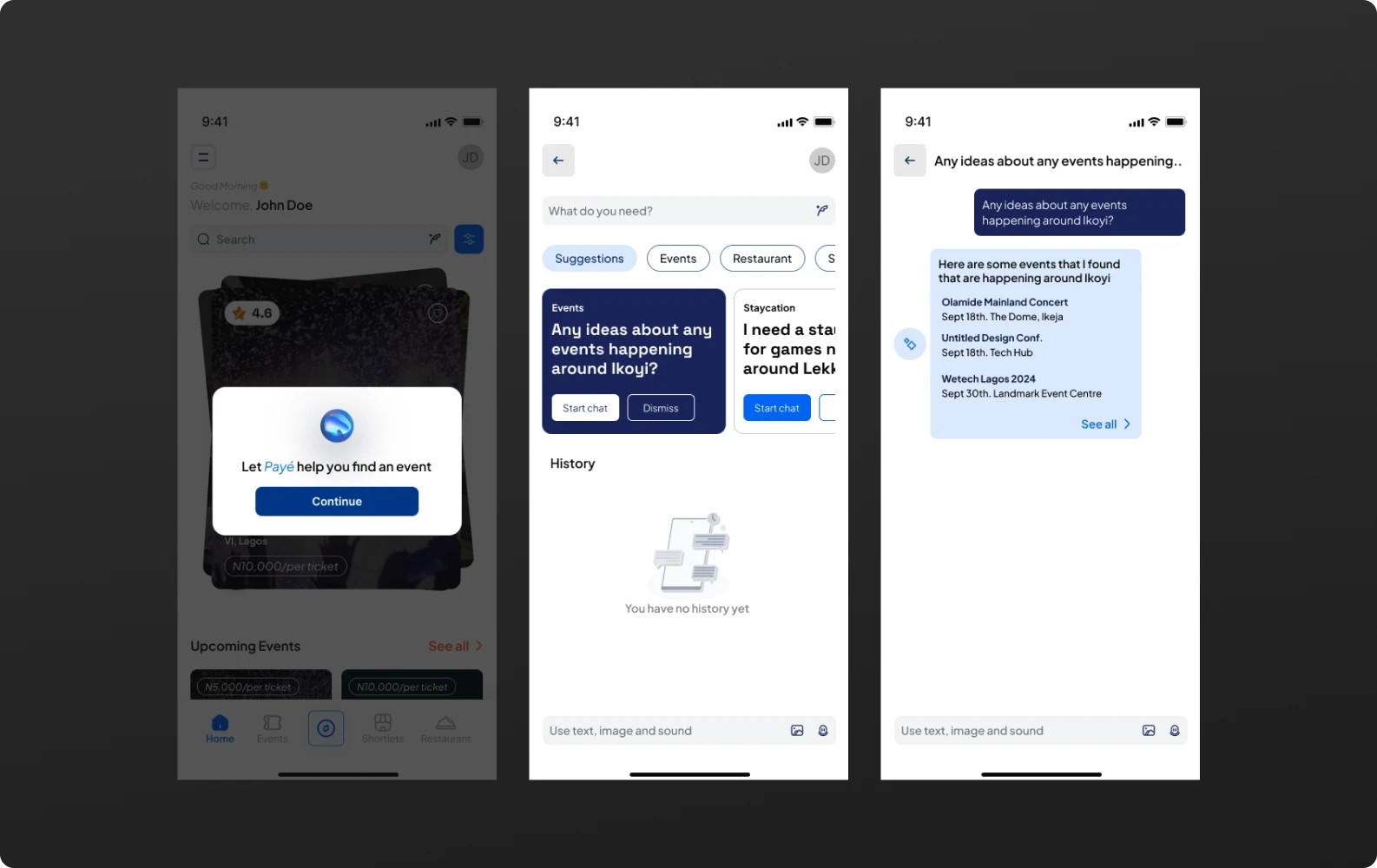
Conversational discovery over dropdown filters
Paye, the AI assistant, was scoped for the moments research showed people stalling. "Jazz clubs near VI" resolves ambiguous intent faster than a stack of filter menus.
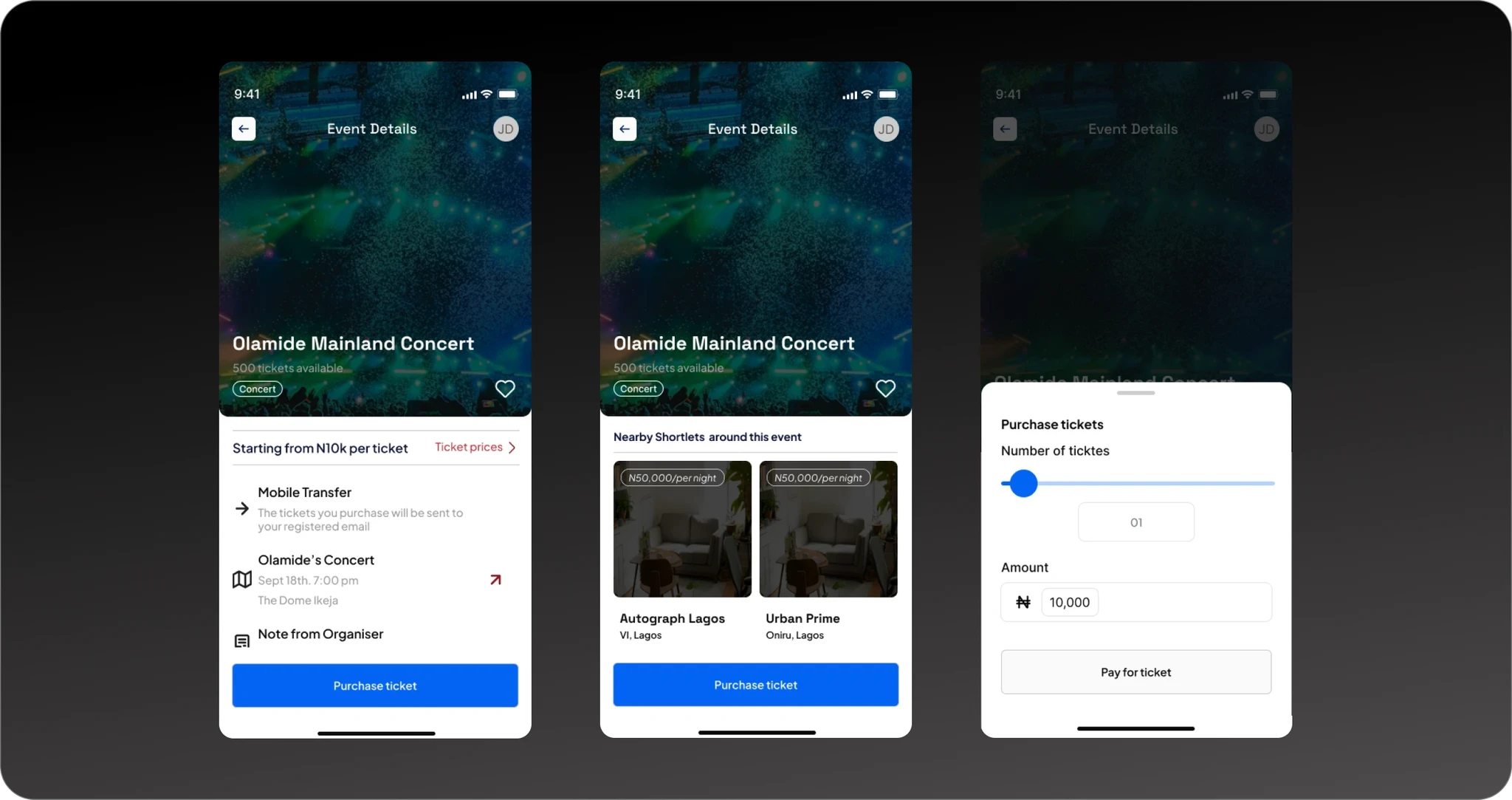
Cross-category bridges at confirmation
Booking confirmation became a launchpad, not a dead end. A concert ticket surfaces nearby dinner and travel-stay options in the same flow, in one session.
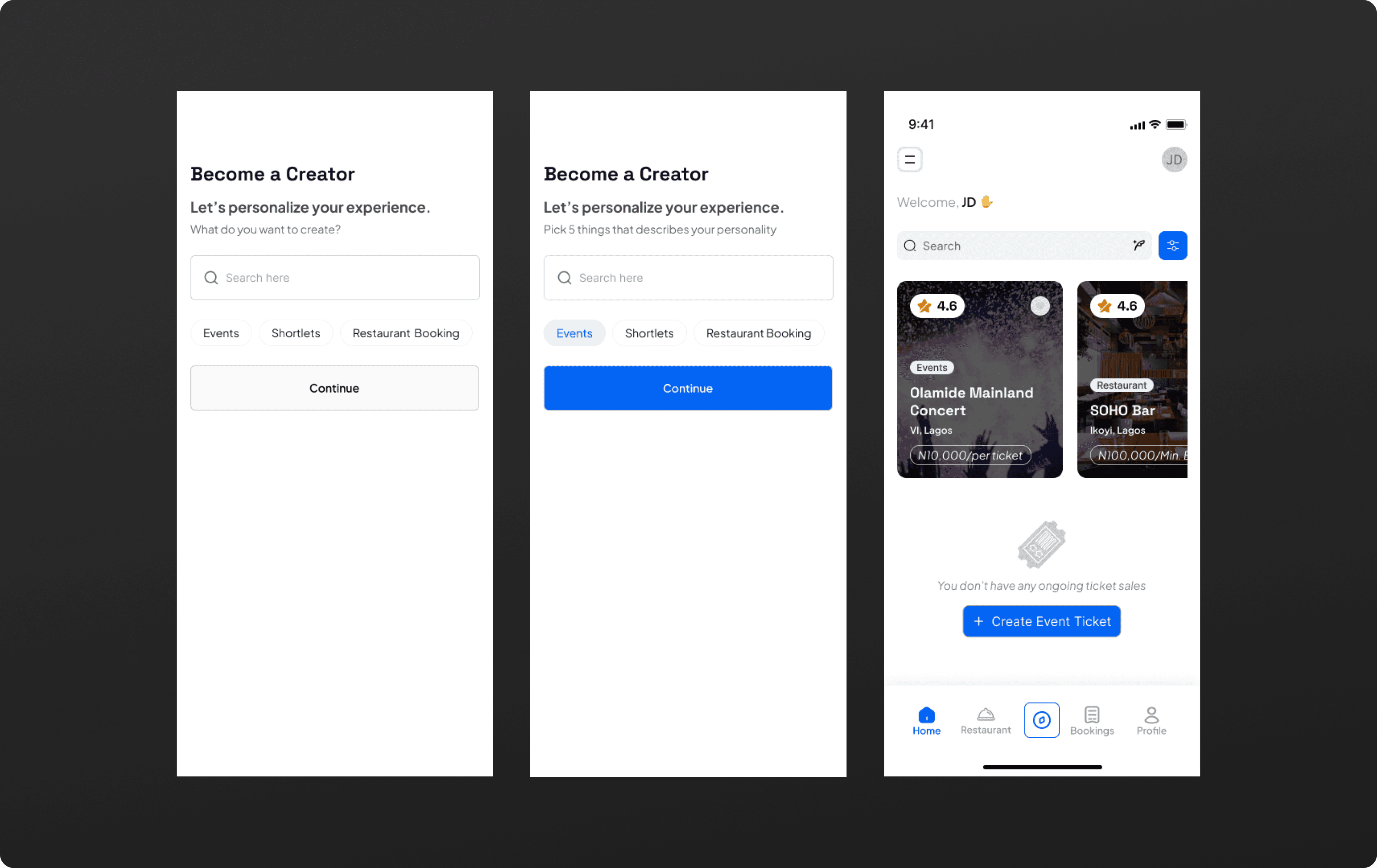
One IA for both sides of the marketplace
The Organisers reuse the same navigation and visual language as the event explorer, instead of shipping as a bolted-on admin panel. A host and a guest never feel like they're in two different products.
OUTCOME
What shipped into the design
While this was still in development, here are some key impacts worth noting.
01
Unified three previously separate planning apps- events, dining, and stays into a single information architecture.
02
Collapsed the booking decision path from app-switching across platforms into one in-session flow: discover, validate, book.
03
Every flow traces back to the core problem: abandonment, trust, social proof, time-on-task, rather than to a feature request.

LEARNINGS
What the work taught me
Being the only designer at the time taught me how to manage timelines and stakeholders' input; learning the art of prioritisation over "nice-to-haves" was what kept the team aligned to the product goal.
Due to complexities surrounding projects like this, when we had little to no proper user testing, prototyping, and demos were crucial to how we iterated as best as we could.
Just as a reflection, given that the product is still in the development phase, given more time, and with proper usability testing, I am confident that we would have uncovered some more opportunities where we could improve on the product solution.

