Human Wox

Automating Compliance Without The Chaos
Human Wox is an AI-powered compliance platform used by organisations in the UK. The challenge was that most compliance teams struggled with managing compliance checks and routine tasks - They relied on multiple spreadsheets and siloed tools.
SAAS
ROLE
PRODUCT DESIGNER
YEAR
2025
The Cost of Manual Compliance
When managing day-to-day tracking and preparing for audits, UK compliance and GRC teams are forced to rely on scattered spreadsheets and manual processes due to inadequate tools, which increases administrative overhead by 3x, eliminates real-time visibility, and leaves 81% of businesses exposed to human error and systemic audit risk.
At the end of the day... We came to a conclusive question:
"How do we automate 80% of regulatory processes without disrupting familiar workflows?"
Put things into perspective… We defined 3 typical user personas based on specific core issues.
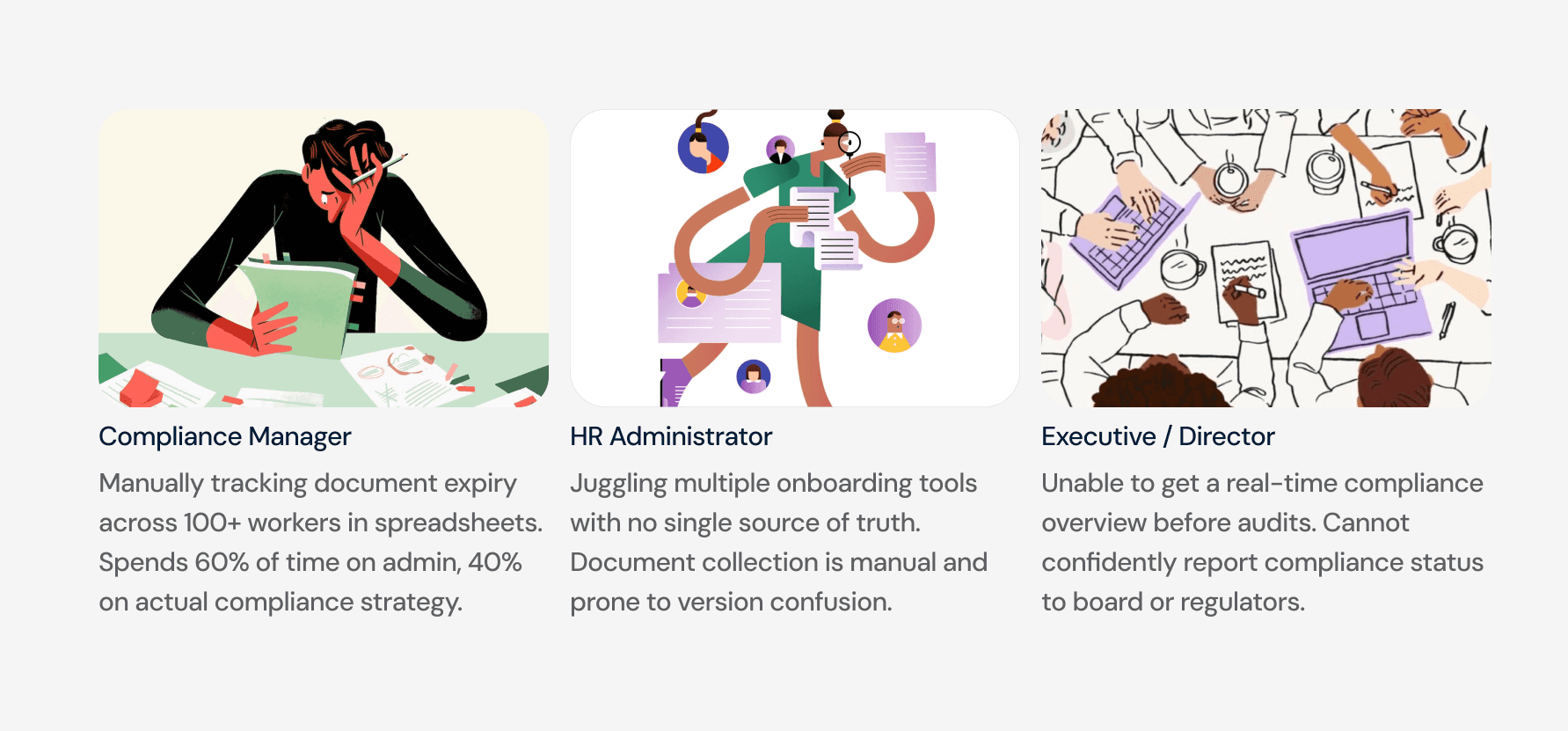

An Opportunity To Lead
Seeing this as an opportunity to lead, my role was focused more on product development and high-level design strategy.
I led the team to carry out user research that leveraged insights from stakeholders and existing online data.
Collaborated with the Product Manager to scope and define a well-documented product to give the entire team clarity on what we were building.
Spearheaded the design of the information architecture, key user flows, and high-fidelity prototype to create alignment with every member of the team from design to engineering.
Used AI prototyping to validate technical feasibility before committing to high-fidelity visual design.
Streamlining solutions
Recognised an opportunity to design a solution that frees teams from compliance busywork, reduces stress, and enables confident organisational growth. Our approach centred on two core systems working in harmony.
Compliance Library
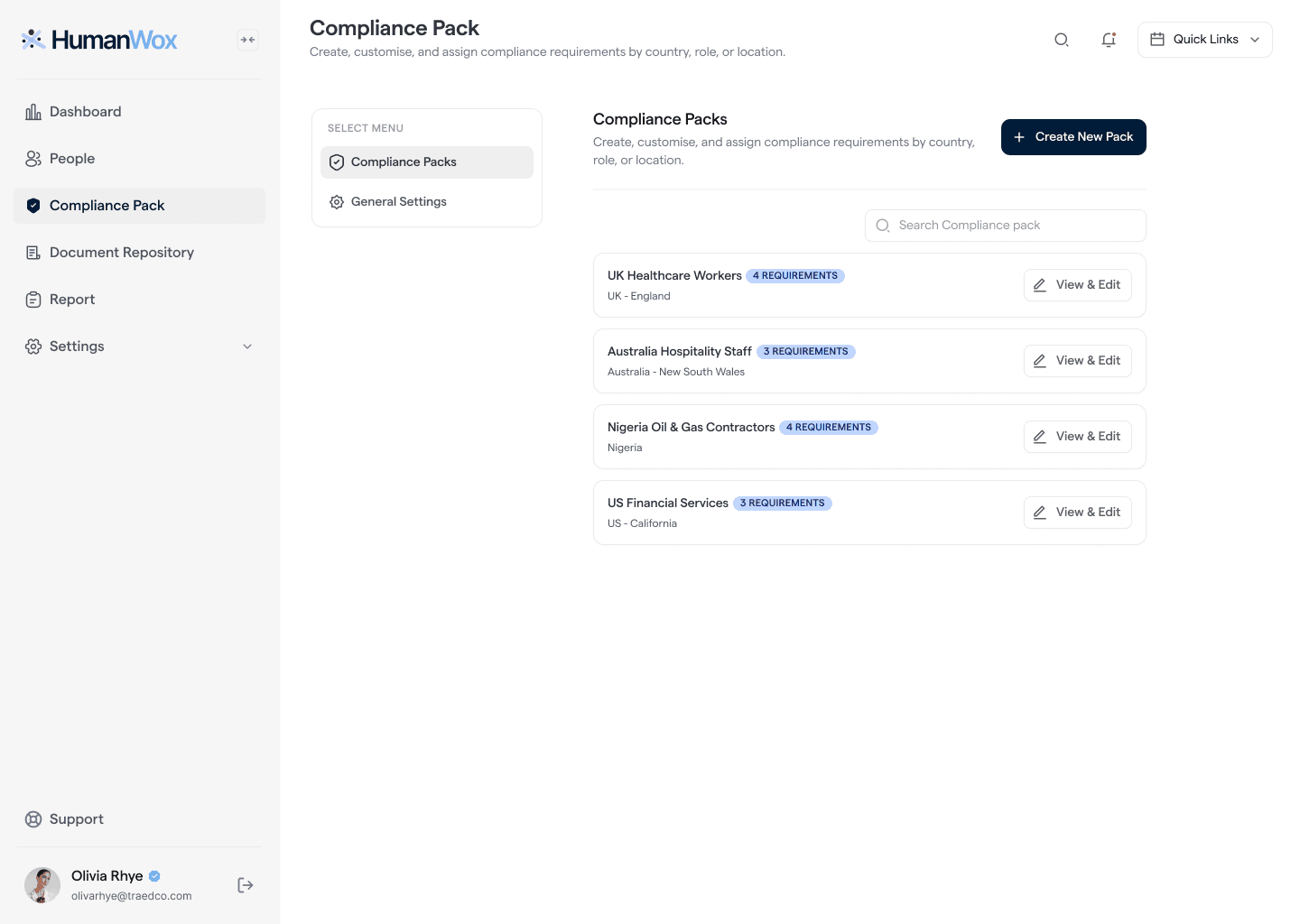
A reusable repository of compliance packs — configurable templates defining which documents, certifications, and checks are required per role or scenario. Build once, deploy everywhere.
Orchestration Engine
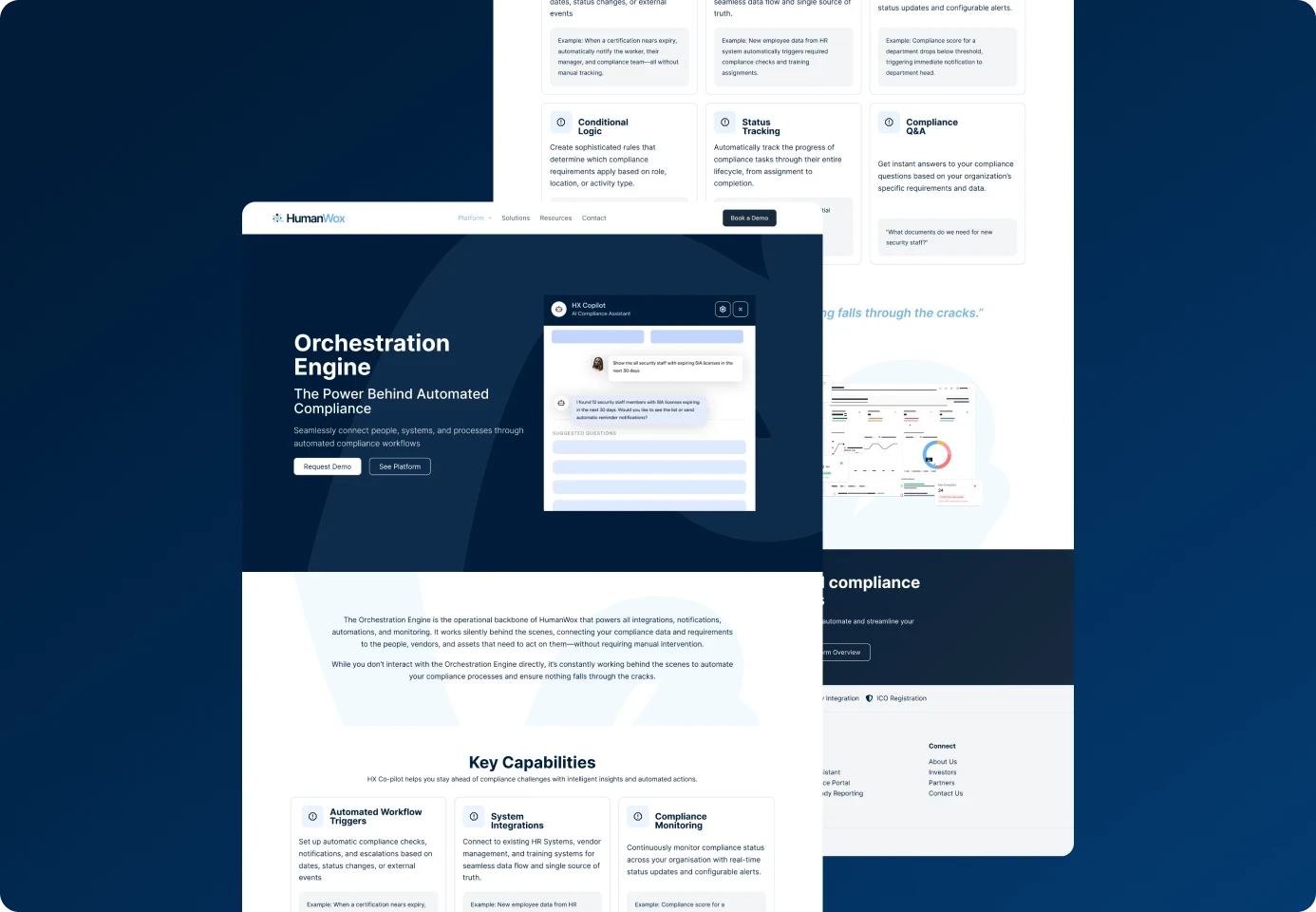
An automated rules engine that monitors, triggers, and executes compliance actions — sending reminders, suspending non-compliant workers, running verification sweeps — without any manual intervention.
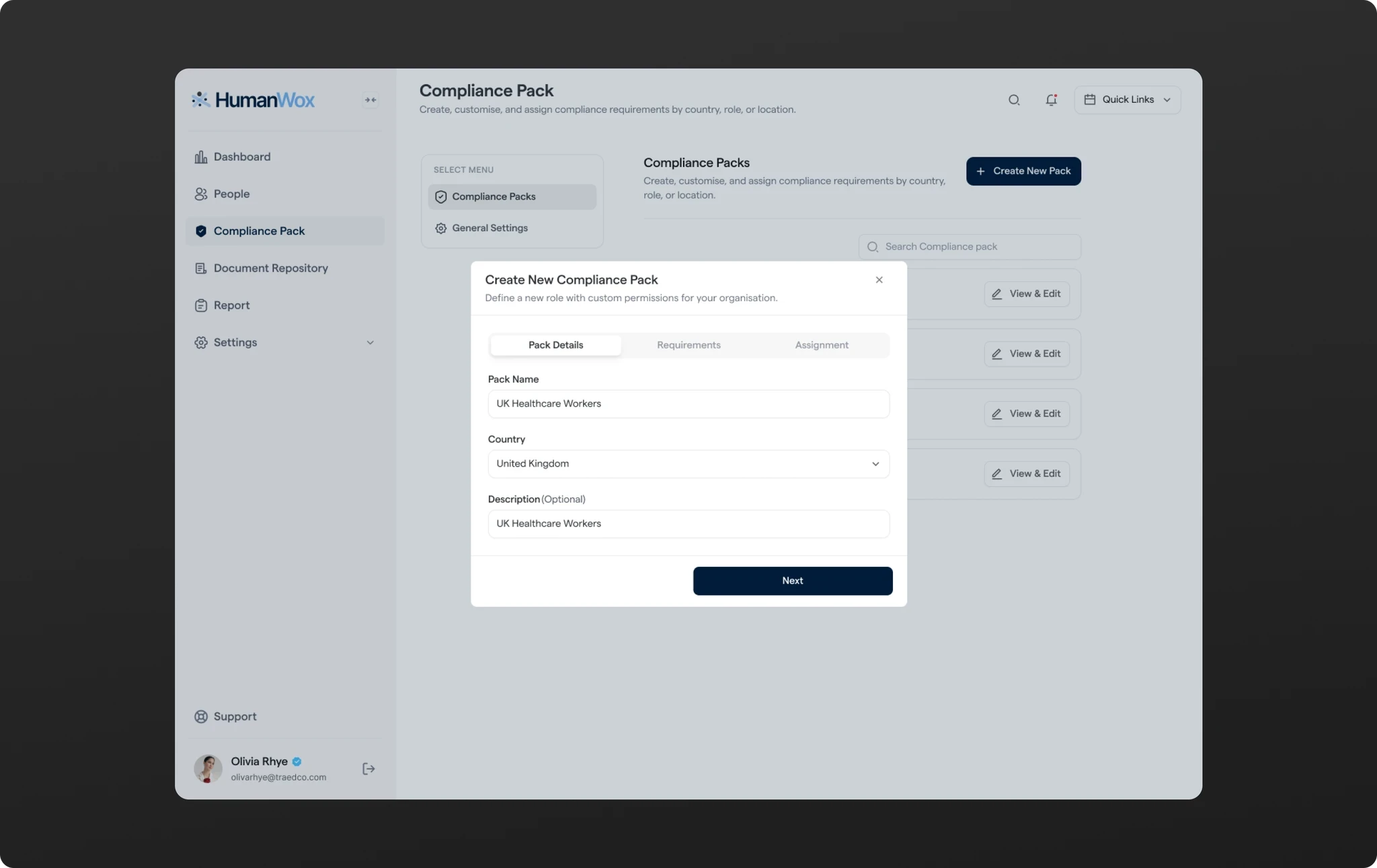
How we got from Uncertainty to Reality
We took an approach that helped us stay aligned and work within the given time frame, ensuring we tested and validated ideas throughout the process.
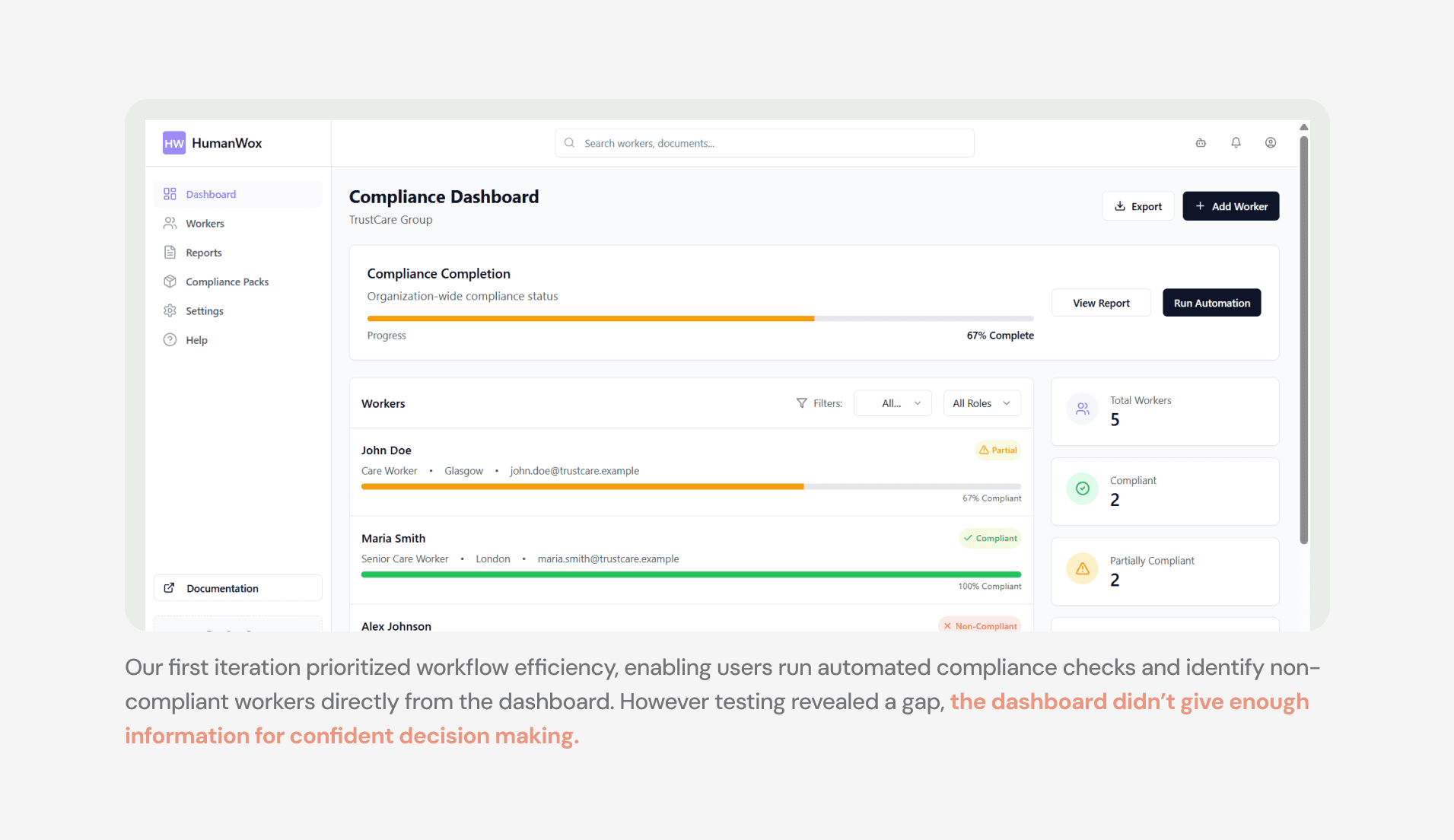
Design Exploration 1 - Workflow efficiency
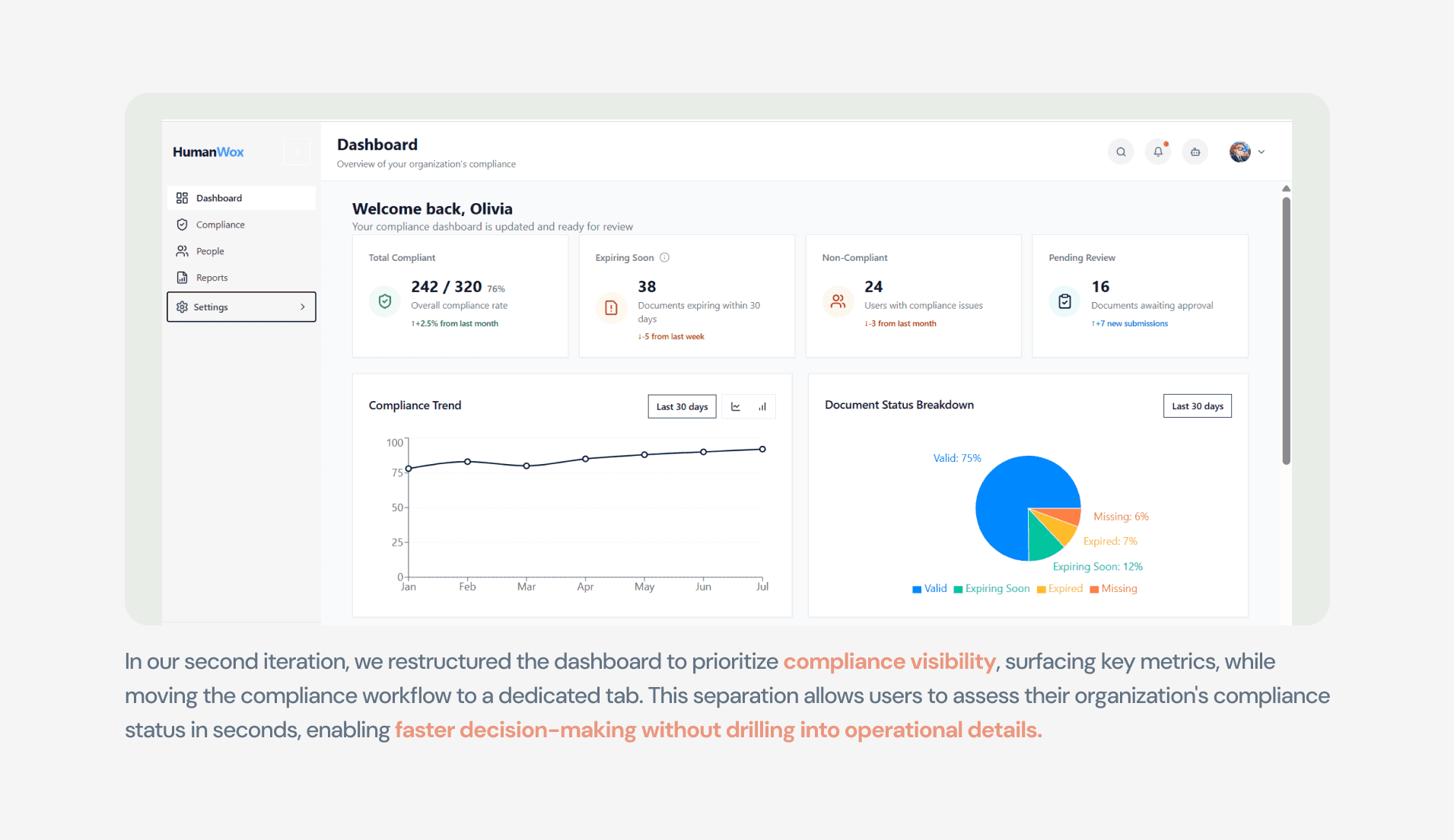
Design Exploration 2 - Compliance Visibility
Key Design Decision
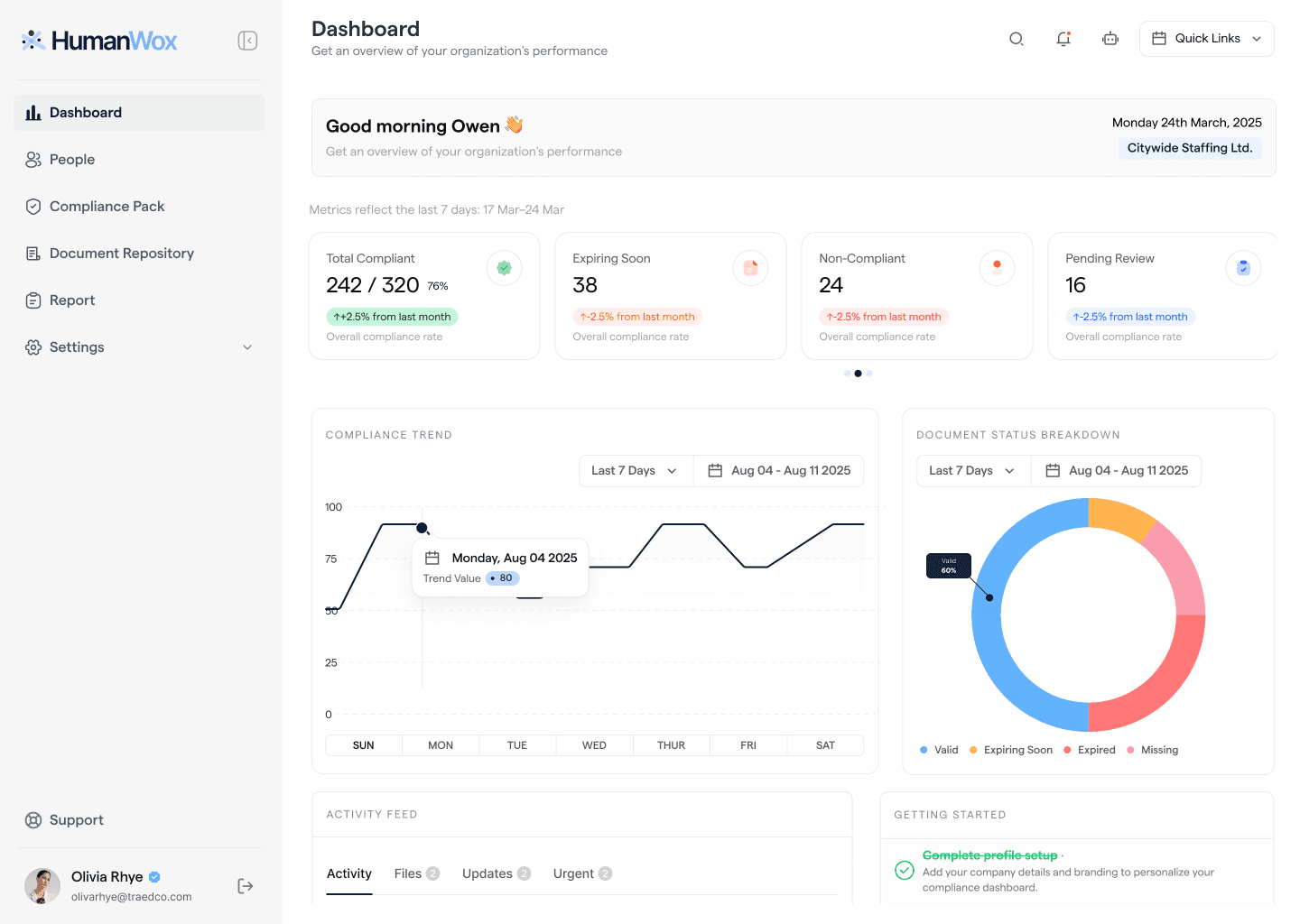
Dashboard-First Thinking: Users need a central dashboard that allows them to make informed compliance decisions without having to go into details.
Reusable Compliance Packs: Designed a reusable pack system that allows users to create a compliance pack and store it. This reduced repeated configuration effort.
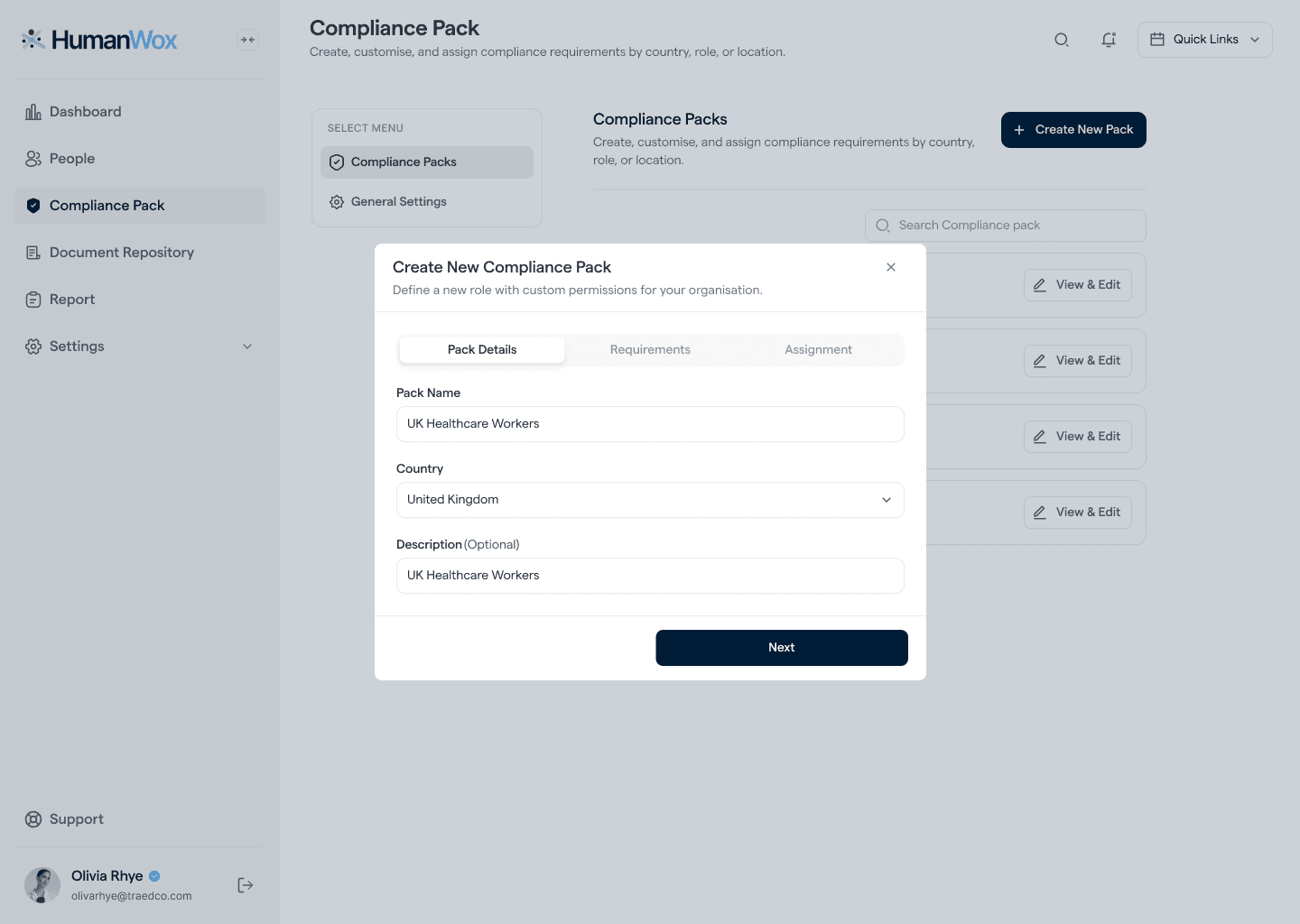
Minimum Viable Interaction: One thing I tried to achieve was to reduce human effort as much as possible. The system handles operational complexity; users only intervene where their judgement genuinely changes the outcome.
Impact and Contribution
Worked with the product manager to create a detailed product requirement document that became the blueprint that align all team members and stakeholders
Introduced an AI prototyping that helped the team iterate faster, reduce technical constraints to improve the product outcome.
I defined the product architecture model and key user flows that showed how the system can reduce routine task and improve human interactions to focus on high level functions.
Leading the iterations I was able to design a dashboard that improve high-level decision making at a glance, answering the question: ARE WE COMPLIANT?
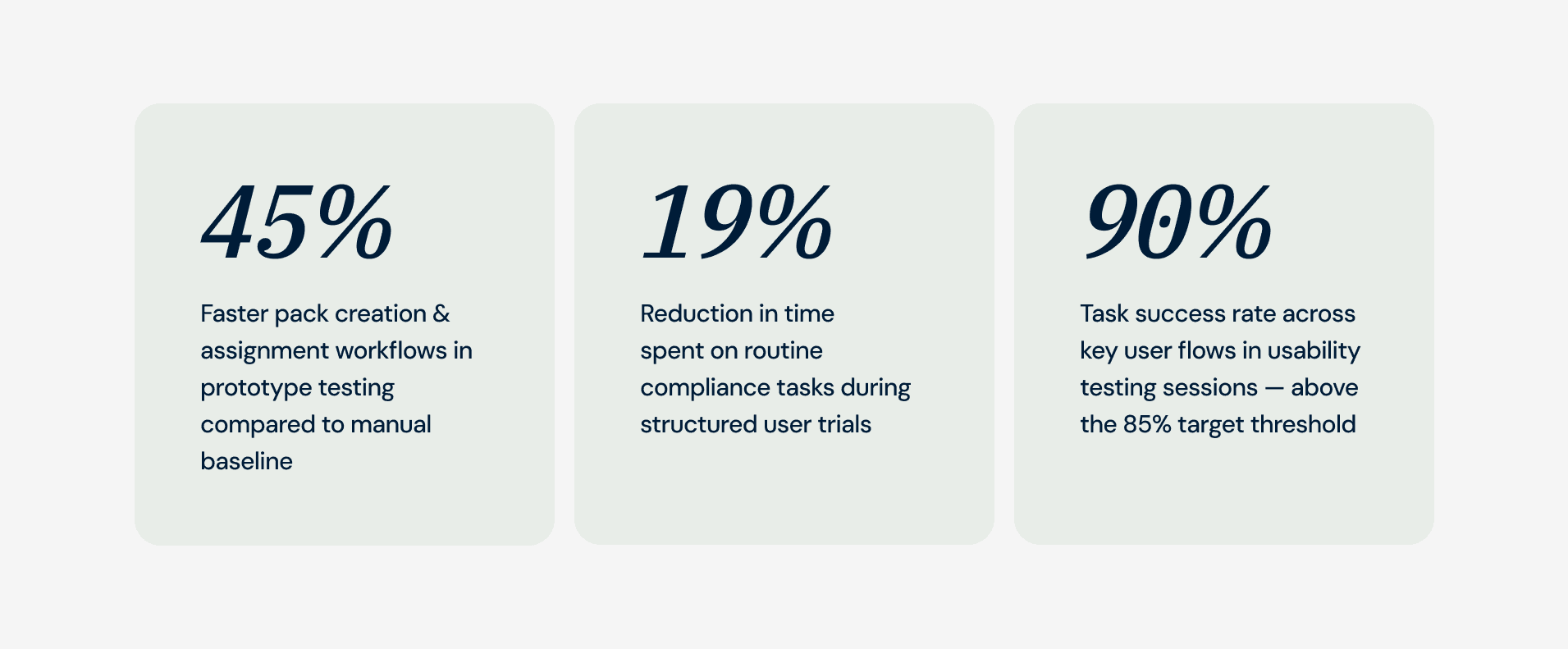
While the product remains in development, user testing and prototype validation demonstrate strong early indicators of success across the key design outcomes.

An Opportunity Defining Project
Looking at my time working on this phase of the project there were some takeaways that we experienced as a team and as an individual, because of the role I played on this project:
Usability testing and prototyping was very crucial to the success of the project as it helped us highlight issues that we would have overlooked which would have cost the team.
Having a clearly defined product requirement, before any form of design gives structure and coordination to the entire team.
When designing complex projects like this team collaboration and stakeholders input reduces long hours of uncertainties and frictions with the project.

